
Best Driveway Sealer for Asphalt Surfaces in 2026
Table of Contents
Types of Driveway Sealer for Asphalt Surfaces
Coal Tar vs. Asphalt Emulsion vs. Acrylic
Match the Sealer to Your Climate
Can You Apply a New Sealer Over an Old One?
A Quick Decision Path
How to Seal an Asphalt Driveway: Step-by-Step
Surface Preparation and Crack Repair
Asphalt Crack Filler vs Sealer: What's the Difference?
Asphalt Driveway Sealer Drying Time and Curing
Best Time of Year to Seal Your Driveway
The Three Conditions That Must All Be True
Your Real Window by Climate
Why Fall Sealing Is Riskier Than It Looks
Spring Sealing: Wait for the Thaw to Finish
DIY vs. Professional Sealcoating: Cost and Results
Frequently Asked Questions
Last Updated: September 24, 2026
Types of Driveway Sealer for Asphalt Surfaces
The best driveway sealer for asphalt depends on three variables most guides ignore: climate zone, traffic load, and what's already on the pavement. Three formulations dominate the market, coal tar, asphalt emulsion, and acrylic, and each fails differently when mismatched.
Coal Tar vs. Asphalt Emulsion vs. Acrylic
Sealer Type | Best For | Curing Time | UV Resistance | Water Resistance |
Coal tar | High-traffic commercial lots, fuel-spill zones | Slowest (24-48 hrs) | Moderate | Highest |
Asphalt emulsion | Residential driveways, mixed traffic | Moderate (4-24 hrs) | Moderate | High |
Acrylic | Decorative/colored pavement, high-UV climates | Fastest (2-4 hrs) | Highest | Moderate |
Polymer-modified | Freeze-thaw climates, crack-prone pavement | Varies by base | Moderate-High | High |
Match the Sealer to Your Climate
The right formulation is regional, not universal.
Freeze-thaw belt (Northeast, Upper Midwest, Mountain West): Prioritize flexibility and water resistance. A polymer-modified asphalt emulsion is the workhorse; coal tar also performs, but check local restrictions. Avoid straight acrylic, too rigid for pavement that heaves and settles every winter.
Hot, high-UV markets (Southwest, Southeast, high-altitude West): UV oxidation, not water, is the primary failure mode. Acrylic or a UV-stabilized emulsion holds color and binder longer. Coal tar fades to gray faster under intense sun.
Coastal and high-rainfall markets: Water intrusion drives failure. Coal tar or a high-solids emulsion with strong waterproofing is the safer bet. Acrylic alone won't cut it.
Mixed or moderate climates: A standard asphalt emulsion is the cost-effective default, upgraded to polymer-modified if the pavement already shows hairline cracking.
Can You Apply a New Sealer Over an Old One?
This question sinks more DIY jobs than any product choice. The short answer: sometimes, and it depends on what's already there.
Emulsion over emulsion: Compatible once the old coat is clean, dry, and sound. Scuff or pressure-wash first.
Emulsion over coal tar: Usually compatible, but the two cure at different rates and can telegraph the old texture. Test a patch first.
Coal tar over emulsion: Not recommended. The solvent in coal tar can soften and lift a water-based emulsion base.
Acrylic over anything: Only over a fully cured, clean acrylic or a properly primed surface. Acrylic over coal tar or emulsion typically peels.
Anything over a failing coat: If the old sealer is flaking, alligatored, or peeling, strip or grind it off first. New sealer over failing sealer fails with it.
Pro Tip When in doubt, seal a 3-foot by 3-foot test patch, let it cure for 48 hours, then try to lift an edge with a putty knife. If it releases, the base isn't compatible and you need to strip it first.
A Quick Decision Path
Identify your climate failure mode (water vs. UV vs. freeze-thaw).
Check local restrictions on coal tar.
Confirm what's already on the pavement.
Choose the lowest-cost formulation that solves your primary failure mode, then upgrade to polymer-modified if the pavement is already cracking.
How to Seal an Asphalt Driveway: Step-by-Step
Sealing an asphalt driveway is a four-stage job: clean, repair, apply, and cure. Skipping any stage shortens the life of the new coat. Here's the process our crews at Advanced Paving and Sealcoating, Inc. follow on every residential job.

Surface Preparation and Crack Repair
Preparation decides whether the sealer bonds or peels. Most failed sealcoat jobs trace back to a dirty or wet surface, not a bad product.
Clear the surface. Sweep or blow off leaves, dirt, and gravel.
Kill vegetation. Pull weeds from cracks and edges; treat the roots.
Degrease stains. Scrub oil spots with a degreaser, then rinse.
Pressure wash. Remove embedded grime, then let the driveway dry fully (24-48 hours in humid weather).
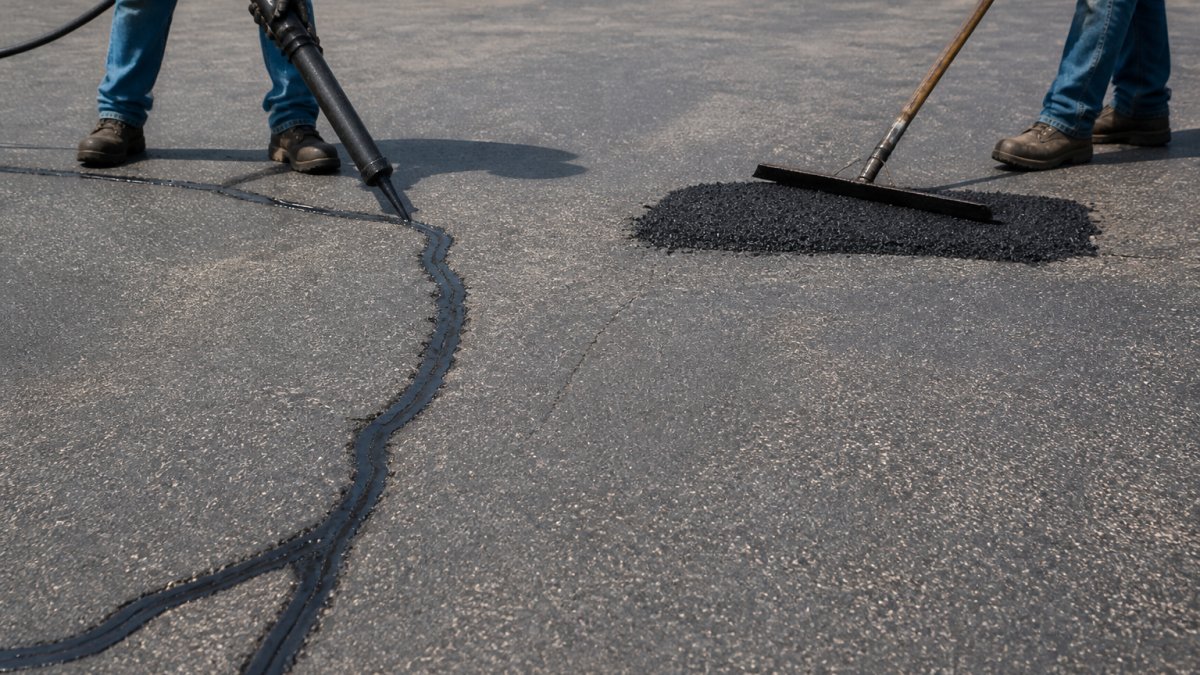
Fill cracks. Use a crack filler rated for your crack width; overfill slightly and tamp flush.
Patch potholes. Apply cold patch or hot-mix and compact with a tamper.
Prime bare spots. Spot-prime areas of exposed aggregate so the sealer adheres evenly.
Pro Tip The single most common DIY mistake is sealing too soon after pressure washing. If the asphalt still feels cool or dark at the surface, moisture is trapped underneath and the sealer will flake within one season.
Asphalt Crack Filler vs Sealer: What's the Difference?
Crack filler and sealer solve two different problems. Crack filler is a thick, rubberized or trowel-grade material that fills individual cracks and gaps before sealing. Sealer is a thin, brush- or spray-applied coating that covers the whole surface to protect against oxidation and water.
Asphalt Driveway Sealer Drying Time and Curing
Asphalt driveway sealer drying time ranges from 2 to 48 hours depending on formulation, temperature, and humidity. Acrylic dries fastest; coal tar cures slowest. Full curing, when the sealer reaches maximum hardness, takes longer.
Water-based emulsion: 4-24 hours to touch-dry; 30-60 days to fully cure
Coal tar: 24-48 hours to touch-dry; 6-12 months to fully cure
Acrylic: 2-4 hours to touch-dry; 30 days to fully cure
Best Time of Year to Seal Your Driveway
Most guides say to seal in "late spring through early fall" and leave it there. That's technically true and practically useless, because the actual window shifts by a month or more depending on where you live and which sealer you bought. Here's how to find your real window.
The Three Conditions That Must All Be True
Sealer needs three things to cure properly, and all three must hold for the full cure window, not just application day:
Surface temperature consistently above 50°F. Air temperature is a proxy; what matters is the pavement. Asphalt absorbs heat, so a 55°F sunny afternoon can put the surface at 70°F, while a 55°F overcast morning can leave it at 48°F. Measure the surface, not the air.
No rain for 24 hours before and 24 to 48 hours after. Water-based emulsions are most vulnerable; one afternoon shower can wash a fresh coat into the gutter. Coal tar is slightly more forgiving but still fails if rain hits before it skins over.
Humidity below roughly 80% during cure. High humidity slows evaporation and stretches every cure time. In coastal or humid-summer markets, this is often the binding constraint, not temperature.
Your Real Window by Climate
Northeast and Upper Midwest: Roughly late May through early September. The hard stop is the first freeze-thaw cycle, sealer applied within about 30 days of the first hard freeze won't fully cure before the pavement starts moving, and it will crack. Watch your first-frost date and back up six weeks.
Mid-Atlantic and Lower Midwest: Late April through mid-October. Longer shoulder seasons are why emulsion dominates here, it cures fast enough to fit more usable days.
Southeast and Gulf Coast: March through November, but the constraint flips to humidity and afternoon thunderstorms. Morning windows are often the only reliable ones in July and August.
Southwest and high-desert West: Spring and fall are ideal. Mid-summer surface temperatures can exceed 140°F, causing sealer to skin over before it levels and leaving lap marks and a blotchy finish. Early morning application is standard.
Pacific Northwest: July through September is the realistic window. The rest of the year, rain probability is too high to guarantee a 48-hour dry cure.
Why Fall Sealing Is Riskier Than It Looks
Fall is the most popular sealing season because homeowners are prepping for winter, and it's also where the most preventable failures happen. Two problems converge:
Cure time runs long. Cool nights and shorter days slow curing. A coat that cures in 24 hours in July can take 72 in October.
The freeze arrives before the cure finishes. Sealer that hasn't fully cured when the first freeze hits is still flexible and water-permeable. Water gets in, freezes, expands, and pops the coat off in sheets the following spring.
Spring Sealing: Wait for the Thaw to Finish
Spring has the opposite problem. The pavement must be fully thawed and dry, not just snow-free. Sealing over a driveway still holding frost in the sub-base traps moisture under the new coat, which escapes as blisters and peeling. A common crew rule of thumb: wait for at least a week of consistently warm, dry weather after the last frost.
Watch Out Applying sealer when rain is forecast within 24 hours can wash the coat off entirely. You'll lose the product, the labor, and the money, and you'll have to start over once the surface dries. Check the hourly forecast, not the daily summary, a 30% chance of afternoon storms is a no-go.
Key Takeaway The single best day to seal is a dry, warm, low-humidity day with at least 48 hours of clear forecast on either side, and that day falls in a different month depending on your climate. Find your local window first, then pick the day.
DIY vs. Professional Sealcoating: Cost and Results
DIY sealcoating saves on labor but demands more time, correct tools, and careful prep. Professional sealcoating delivers a more uniform finish, proper prep, and a crew that handles crack filling, patching, and cleanup in one visit. For most homeowners and property managers, the deciding factor is surface area and how much prep the pavement needs.
How long have you been doing this, and can you share local references?
What's included in the quote: prep, crack fill, patching, cleanup?
What's the weather contingency if it rains?
How long until I can drive on it?
What's your warranty on the work?
Key Takeaway The cheapest quote is rarely the best value once you factor in reapplication frequency. A properly prepped, professionally applied coat typically outlasts a rushed DIY job by several seasons.
Frequently Asked Questions
How often should you seal an asphalt driveway?
Most asphalt driveways need sealing every 2 to 3 years, depending on traffic and climate. In Central Illinois, the freeze-thaw cycle accelerates wear, so you may need to reseal closer to every 2 years. Wait at least 6 to 12 months after new asphalt installation before the first seal. If the surface looks faded, chalky, or has small cracks, it is time to reseal.
Is it better to spray or brush on driveway sealer?
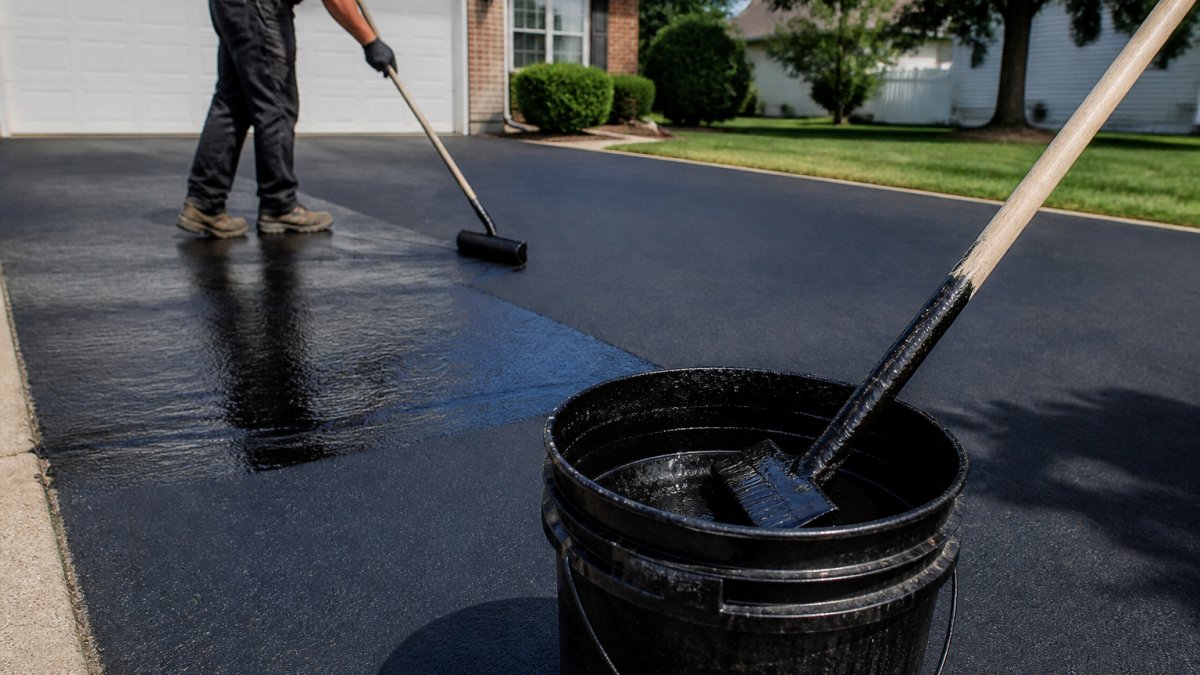
Spray application covers large areas faster and gives a uniform finish, which works well for commercial lots. Brush or squeegee application pushes sealer into cracks and pores for a thicker, more durable coat on residential driveways. For best results, many professionals use a squeegee for the first coat and a sprayer for the second. The right method depends on your driveway size and surface condition.
What is the difference between coal tar and asphalt-based sealers?
Coal tar sealers resist oil, gas, and UV damage better and last longer, but they contain higher levels of PAHs and are banned in some areas. Asphalt emulsion sealers are more environmentally friendly, easier to apply, and cost less, but they wear faster in high-traffic areas. Acrylic sealers are water-based and good for UV resistance, but they are not as durable for driveways with heavy vehicle use.
How long does asphalt sealer take to dry?
Asphalt sealer typically dries to the touch in 4 to 8 hours and is ready for foot traffic in 12 to 24 hours. Vehicle traffic should wait 24 to 48 hours, and heavy vehicles need 48 to 72 hours. Humidity, temperature, and sealer type affect drying time. Cool, damp weather slows curing, so apply sealer when temperatures are between 50°F and 80°F and no rain is forecast for 24 hours.
GET A FREE ESTIMATE

Comments