
Professional Driveway Sealcoating Cost vs DIY
Last Updated: October 22, 2026
Quick Summary
The driveway sealcoating cost for a 1,500-square-foot, two-coat job commonly lands between $400 and $900 for DIY materials and tools, plus 8 to 12 hours of your labor, while a professional job with crack filling runs $500 to $900. The ranges overlap heavily, so DIY savings come mostly from skipping labor, not cheaper materials.
Professional rates run $1.25 to $1.50 per square foot for materials and labor, per Angi's published range.
A 1,500-square-foot driveway at two coats needs roughly 9 to 12 pails of sealer, or $225 to $540.
Sealcoating takes 24 to 48 hours to dry for foot traffic and 48 to 72 hours before parking.
Most asphalt driveways need resealing every two to three years, not every year.
Ask contractors whether quotes include crack filling, edging, and a second coat before comparing prices.
Table of Contents
Professional Driveway Sealcoating Cost vs DIY: The Real Numbers
Driveway Sealcoating Cost Per Square Foot: Professional vs DIY
What DIY Materials and Equipment Actually Cost
Cost to Sealcoat a 1,500-Square-Foot Driveway
How Long Driveway Sealcoating Takes to Dry
How Often to Seal an Asphalt Driveway
Pros and Cons: DIY vs Hiring a Professional
Comparing Contractor Quotes and Long-Term Value
Frequently Asked Questions
Professional Driveway Sealcoating Cost vs DIY: The Real Numbers
Sealing an asphalt driveway costs a national average of $575 in 2026, according to Angi's driveway sealing cost data, yet the gap between a professional job and a DIY kit is narrower than most homeowners expect. This guide from Advanced Paving and Sealcoating, Inc. breaks down the real numbers behind the cost of professional driveway sealcoating vs DIY, from materials and equipment to long-term value. We have sealed driveways and parking lots across Central Illinois for more than 20 years.
Here is the short version: DIY saves money on labor but rarely on total outcome. Below, we show you exactly where the savings are real and where they disappear.
Driveway Sealcoating Cost Per Square Foot: Professional vs DIY
Professional driveway sealcoating cost per square foot runs $1.25 to $1.50 for materials and labor, per Angi's published range, while a 2026 guide from TruTec's sealcoating cost breakdown puts residential work at $0.50 to $1.00 or more per square foot. DIY materials alone often land in that same lower band once you buy sealer, crack filler, and tools.

The overlap is the point. Your per-square-foot savings on DIY come almost entirely from skipping labor, not from cheaper materials. TruTec also lists commercial sealcoating at $0.10 to $0.40 per square foot, which shows how much volume changes the equation.
What DIY Materials and Equipment Actually Cost
The DIY cost of a sealcoating project breaks into four buckets: sealer, crack filler, tools, and your time. A driveway sealcoating cost estimate that ignores any of these is incomplete. Here is what each bucket actually runs in 2026, using commonly published retail ranges rather than a single store's sale price.
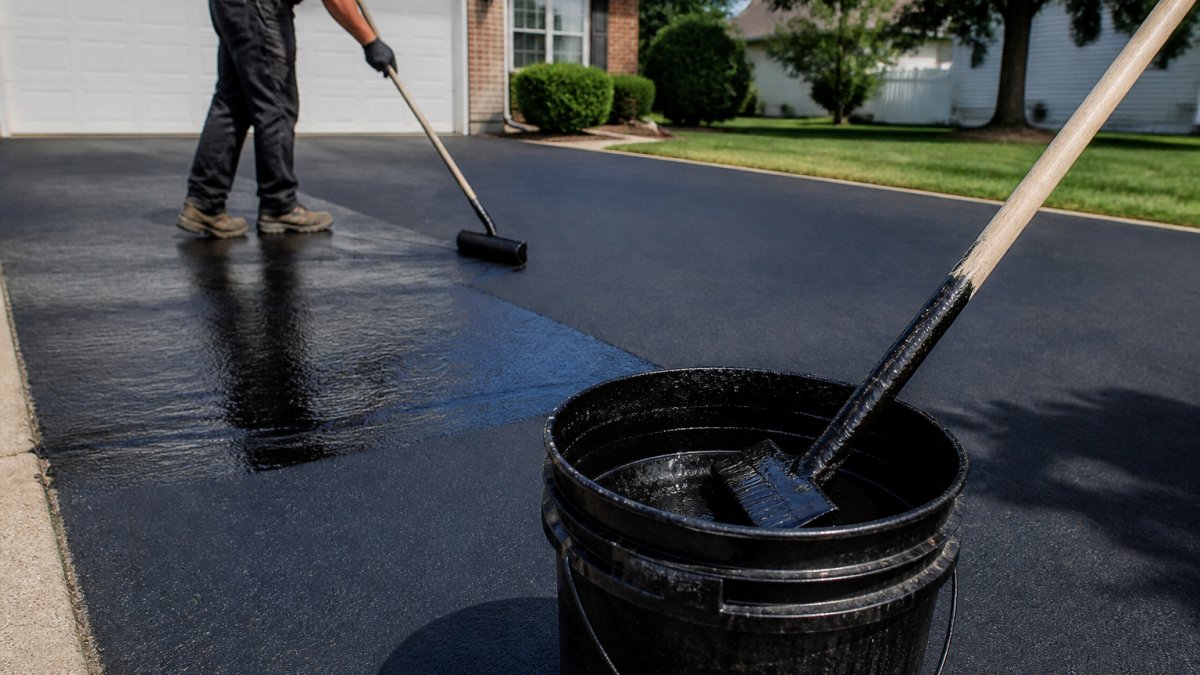
Asphalt sealer. Ready-to-use asphalt emulsion sealer is typically sold in 4.75-gallon pails and 55-gallon drums. A 4.75-gallon pail commonly retails between about $25 and $45 depending on solids content and whether it is a sanded or non-sanded formula.
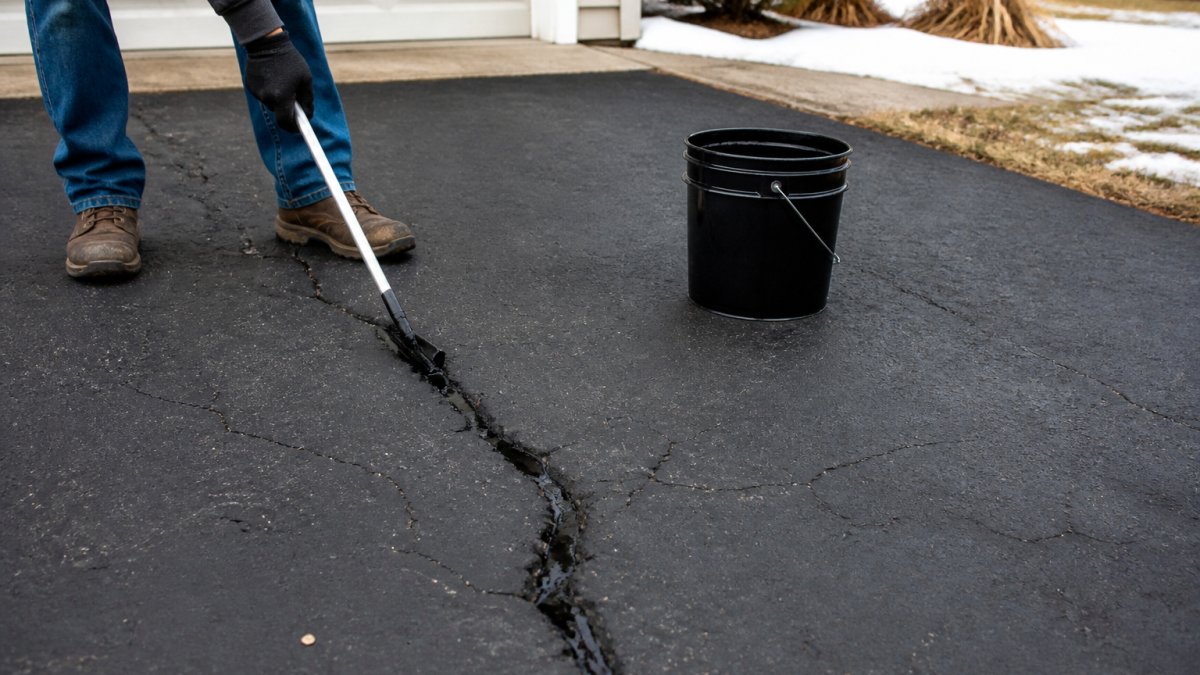
Crack filler. Cold-pour crack filler in a 1-quart squeeze tube runs about $8 to $15; a 1-gallon jug runs about $20 to $35; and a 10-ounce tube of self-leveling crack sealant for wider cracks runs about $8 to $12. A driveway with 30 to 50 linear feet of cracks can easily consume $40 to $100 in filler before any sealer goes down.
Tools and equipment. A basic DIY kit includes a long-handled squeegee ($25 to $50), a stiff broom ($15 to $30), a mixing paddle and drill (the drill is often already owned; a paddle is $10 to $20), a 5-gallon bucket ($5 to $10), and nitrile gloves and eye protection ($15 to $25).
Prep supplies. Degreaser ($10 to $20), a garden hose and nozzle (often owned), and a wire brush ($8 to $15) round out the list. If the driveway has oil stains, a proper degreaser and a scrub brush are not optional; sealer will not bond to oil.
Add those buckets for a typical 1,500-square-foot, two-coat DIY job and the material and tool total commonly lands between roughly $400 and $900, before you count a single hour of your own labor. That range overlaps the low end of professional per-square-foot pricing, which is why the DIY savings are smaller than the sticker on a single pail suggests.
Watch Out Skipping crack filling before sealing is the most common DIY mistake. Sealer bridges a moving crack for a season or two, then the crack reappears wider and lets water into the base. That water freezes, expands, and turns a $40 tube of filler into a pavement repair.
Cost to Sealcoat a 1,500-Square-Foot Driveway
A 1,500-square-foot driveway is the benchmark most homeowners search for, and it is where the two options diverge most clearly. The problem with most published ranges is that they compare different jobs: a one-coat refresh on a clean, sound surface is not the same scope as a two-coat job with crack filling and edging. Here is a like-for-like comparison for the same 1,500-square-foot driveway in fair condition with moderate cracking.
Professional, itemized. Using a mid-range professional rate of about $0.20 to $0.35 per square foot for materials and labor on a straightforward residential job, a 1,500-square-foot driveway lands around $300 to $525 for a single coat with basic prep. That is consistent with the national average of about $575 reported by Angi's driveway sealing cost data and with Thumbtack's 2026 range of roughly $401 to $1,667, where most homeowners pay around $806.
DIY, itemized. The same driveway, done by the homeowner with two coats and crack filling, breaks down roughly as follows: 9 to 12 pails of sealer at $25 to $45 each ($225 to $540), $40 to $100 in crack filler, $100 to $250 in tools and prep supplies (or $50 to $100 to rent a sprayer for a day), and 8 to 12 hours of your own labor. Material and tool cost commonly lands between $400 and $900, and the labor is unpaid but not free.
The honest comparison. For a fair-condition driveway, the DIY material cost and the professional all-in price overlap heavily. The real gap opens when the driveway needs extensive crack filling, edging, or a second coat, because those are the line items DIYers most often skip and contractors most often include.
Cost Factor | DIY (1,500 sq ft, 2 coats) | Professional (1,500 sq ft, 2 coats + crack fill) |
Sealer and materials | $225 to $540 | Included in quote |
Crack filler | $40 to $100 | $50 to $150 line item |
Tools or rental | $100 to $250, or $50 to $100 rental | Contractor-supplied |
Labor | 8 to 12 hours of your time | Crew labor included |
Typical all-in | $400 to $900 plus your time | $500 to $900 |
Typical result | Variable finish | Uniform coat, warranty |
Pro Tip Ask any contractor whether their quote includes crack filling, edging, and a second coat. A low bid that excludes prep is not a cheaper job, it is a smaller job. Compare quotes line by line, not by the bottom number.
How Long Driveway Sealcoating Takes to Dry
Driveway sealcoating typically takes 24 to 48 hours to dry enough for foot traffic, and 48 to 72 hours before you park a vehicle on it. Humidity, shade, and cool overnight temperatures push those windows longer. A thin DIY coat may feel dry to the touch in a few hours, but tackiness underneath means it is not cured.
Weather matters more than most homeowners expect. Sealant needs sun and warmth to cure properly, and rain within the first several hours can wash a fresh coat into the street. If you are sealing in spring or fall, watch the forecast for a two-day dry window, not just an afternoon.
How Often to Seal an Asphalt Driveway
Most asphalt driveways need resealing every two to three years, not every year. New asphalt should cure for at least six months to a year before its first coat. Sealing too often builds up a brittle layer that cracks instead of flexing with the pavement.
Lifecycle cost is where the DIY-versus-professional math gets honest. A cheaper coat that fails in 18 months costs more per year of protection than a proper job that lasts three. Resealing intervals, not the sticker price, decide the long-term value.
Pros and Cons: DIY vs Hiring a Professional
The honest answer depends on your driveway, your time, and your tolerance for redoing the work.
DIY pros:
Lower upfront cost because you skip labor charges
You control the schedule
Equipment is reusable if you reseal on a regular interval
DIY cons:
Uneven finish and missed spots are common
Surface preparation and crack filling often get rushed
No warranty if the coat peels or fails
Safety risks from fumes, hot weather, and slip hazards
Professional pros:
Proper cleaning, crack sealing, and repairs before the coat goes down
Uniform result and correct coverage rate
Commercial-grade sealer applied at the right thickness
Peace of mind and a crew that handles the mess
Professional cons:
Higher upfront cost
Scheduling depends on weather and crew availability
A contractor comparison argues the DIY-versus-hired cost difference may be only around $100, while professional work lasts longer and includes better crack sealing. That claim is worth testing against your own quotes.
Key Takeaway The real question is not which option is cheaper today. It is which option costs less per year of protection. A professional sealcoating job priced fairly usually wins that calculation over a three-year cycle.
Comparing Contractor Quotes and Long-Term Value
Comparing contractor quotes is where homeowners leave the most money on the table. Ask every provider the same questions and write the answers down.
Does the quote include cleaning, degreasing, and edging?
Is crack filling included, and at what depth?
How many coats, and what sealer product is used?
What is the coverage rate per gallon?
Is there a warranty, and what does it cover?
Are they insured, and can they provide references from similar properties?
At Advanced Paving and Sealcoating, Inc., we quote the prep work as part of the job, not as an add-on, because a sealcoat over a dirty or cracked surface is money spent twice. Our team has handled residential driveways and commercial parking lots across Central Illinois for over 20 years, and we are available around the clock for emergency pavement issues.
The challenge with driveway sealing is that the cheapest quote and the best value rarely come from the same provider. If you want a sealcoat that survives the freeze-thaw cycle instead of peeling by spring, Advanced Paving and Sealcoating, Inc. can help. Our family-owned crew brings over 20 years of experience, thorough surface preparation, and commercial-grade sealers to every driveway and parking lot. Get a free estimate from Advanced Paving and Sealcoating, Inc. and protect your pavement with a job done right the first time.
Frequently Asked Questions
Is it better to seal your driveway DIY or hire a professional?
It depends on your driveway's condition and how much time you can give the job. DIY saves on labor but requires cleaning, crack filling, and even application, and a contractor comparison notes the cost gap may be only around $100 while professional work lasts longer with a more uniform result. If your asphalt has cracks, drainage issues, or heavy wear, a professional service is the safer call because preparation quality decides how well the seal holds.
How much does it cost to sealcoat a 1,500-square-foot driveway?
Angi lists professional asphalt driveway sealing at $1.25 to $1.50 per square foot, which puts a 1,500-square-foot driveway at roughly $1,875 to $2,250. A 2026 TruTec guide cites a lower residential range of $0.50 to $1.00 or more per square foot, so quotes vary widely by region, prep work, and sealer type. Get a written estimate that itemizes cleaning and crack filling before comparing numbers.
How long does driveway sealcoating take to dry before you can drive on it?
Most sealers need 24 to 48 hours before vehicle traffic, and longer in cool or humid conditions. Plan around weather: rain within the first several hours can wash fresh sealer and force a redo. If you hire a professional, ask when the crew applies the coat and confirm the curing window in writing so you don't park on it too soon.
How often should an asphalt driveway be sealcoated?
Most asphalt driveways need resealing every two to three years, though heavy traffic and harsh winters can shorten that interval. Sealing too often wastes money and can cause buildup, while waiting too long lets cracks and oxidation set in. Check for fading color, exposed aggregate, and small cracks as your signal that it's time, and address crack filling before any new coat goes down.
GET A FREE ESTIMATE
Comments