
How Pavement Upgrades Raise Commercial Property Value
Last Updated: October 29, 2026
Quick Summary
Pavement upgrades raise commercial property value because buyers, tenants, and appraisers read a well-kept lot as a sign of a well-run building. Cracked, faded asphalt signals deferred maintenance and becomes a discount request, while fresh sealcoating, crisp striping, and smooth pavement protect the offer price.
Appraisers flag poor pavement as a deferred capital cost that comes straight off the offer.
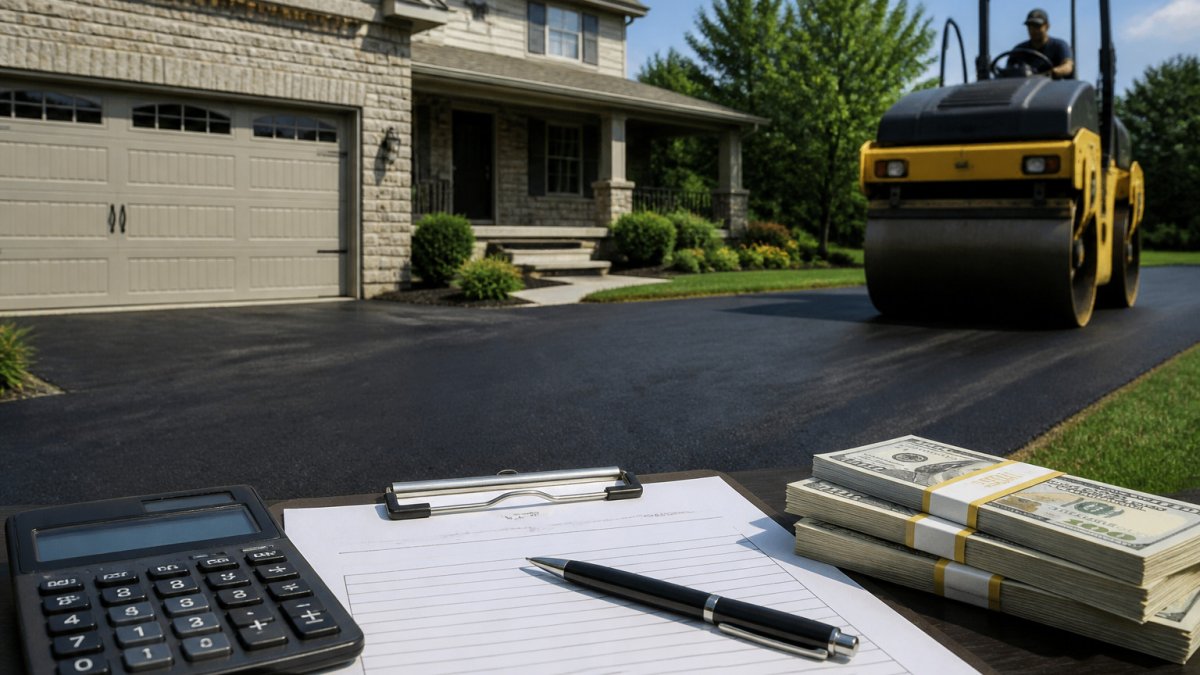
Sealcoating costs roughly $0.20 per sq ft every three years versus an overlay at $4-$5 per sq ft.
A disciplined sealcoat cycle pushes overlay timing out by five or more years.
Rate each lot section 1 to 5 for cracking, potholes, drainage, and striping.
Fix the lowest-scoring sections first, then sealcoat everything on schedule.
Table of Contents
How Pavement Upgrades Improve Commercial Property Value
Pavement upgrades raise commercial property value because buyers, tenants, and appraisers read a well-kept lot as a sign of a well-run building. For a broader framework covering inspections, sealcoating, and asphalt repair schedules, see our commercial parking lot maintenance guide.
The logic is simple. A parking lot is the first thing a visitor touches and the last thing they leave. It shapes their impression before they reach the door.
What Appraisers and Buyers Actually Look At
Appraisers look at condition, not cosmetics. A paved surface in poor shape gets flagged as a deferred capital cost, and that number comes straight off the offer. Buyers do the same math.
Here is what they check:
Cracks wider than a quarter inch and any alligator cracking
Potholes and settled areas that hold water
Faded or missing pavement markings and striping
Drainage that ponds instead of draining
The age of the last sealcoat or resurfacing
Each item becomes a line item in a repair estimate. A lot with several problems reads as a discount request, not a selling point.
Curb Appeal and First Impressions Start at the Parking Lot
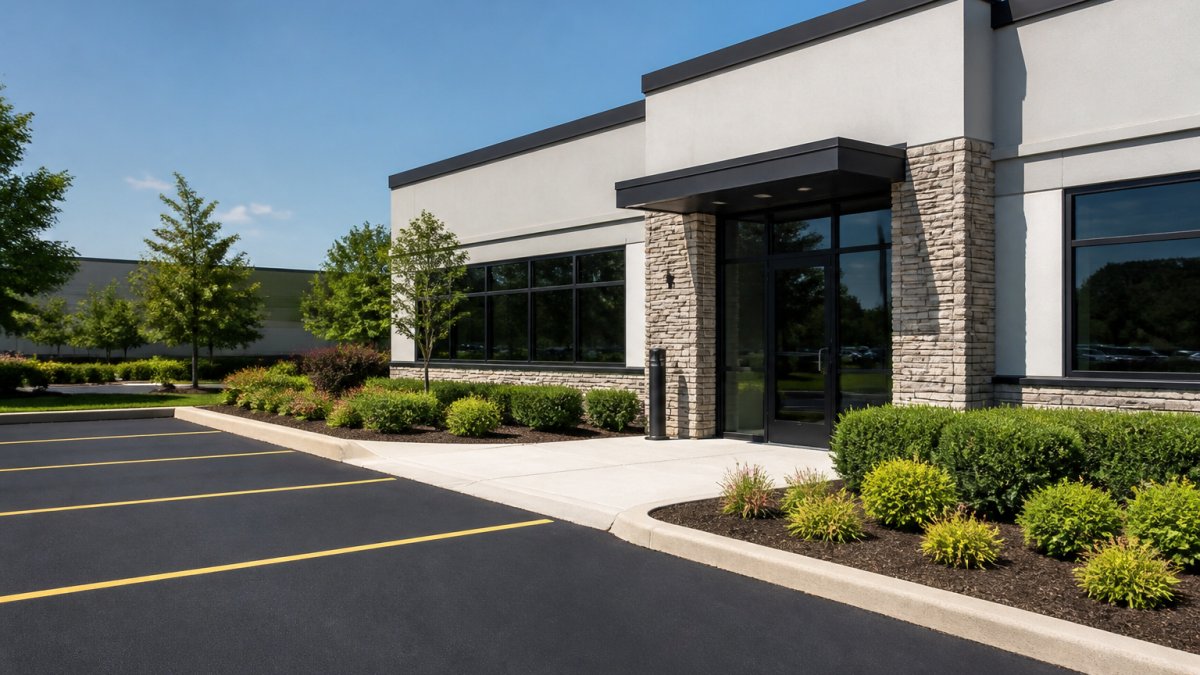
Curb appeal begins where the tires stop. A clean, evenly coated lot with bright striping makes a property feel cared for before anyone opens a door.

For a deeper look at how paving shapes that first impression, read our guide on boosting your property's curb appeal with professional asphalt paving.
Commercial Parking Lot Paving: Layout, Capacity, and Traffic Flow
Commercial parking lot paving is not just about a smooth surface. Layout decides how many cars fit, how easily they move, and whether drivers feel safe backing out. A repave is the moment to fix a bad layout.
A few practical fixes:
Widen drive aisles so two cars pass without a squeeze
Re-stripe stalls to standard dimensions to restore lost capacity
Add clear directional arrows and stop bars
Separate delivery or loading zones from customer traffic
Better traffic flow cuts congestion at peak hours and lowers the chance of a fender bender. That matters to tenants with high daily traffic.
Safety, Accessibility, and Liability Reduction
Safety and liability reduction start with the surface underfoot. Uneven pavement, missing curb ramps, and worn striping create trip and fall risks that owners carry. Fixing them protects people and limits exposure.
Key items to address:
Accessible parking spaces with correct signage and access aisles
Curb ramps that meet current ADA compliance standards
Clear pedestrian access paths from the lot to the entrance
Visible stop signs, speed markings, and crosswalks
The ADA Standards for Accessible Design spell out the requirements for accessible spaces and routes. A lot that falls short invites complaints and claims. For a full checklist, see our guide to safety features for every commercial parking lot.
Parking Lot Resurfacing Versus Repair: Choosing the Right Fix
Parking lot resurfacing makes sense when the base is sound but the surface is worn. Repair is the better call when damage is isolated. Choosing wrong wastes money either way.
Use this quick guide:
Condition | Best Fix | Why |
Isolated cracks under a quarter inch | Crack filling | Stops water intrusion cheaply |
Potholes and small failed patches | Pothole repair | Restores the spot without a full overlay |
Widespread surface wear, sound base | Resurfacing | New wearing course extends life |
Alligator cracking and base failure | Full-depth repair or rebuild | Overlay will fail over a bad base |
Sealcoating is commonly treated as routine care between repair and resurfacing. For a closer comparison of the two most common fixes, read asphalt crack sealing vs patching for commercial lots.
Commercial Asphalt Sealcoating and the Case for Preventive Care
Commercial asphalt sealcoating is one of several preventive options, but it is only one choice in a full menu of commercial paving options. Choosing the right surface, and the right maintenance schedule for that surface, is what determines how value is protected. For current pricing on any of these options, contact Advanced Paving and Sealcoating, Inc. for a quote; pricing depends on quantity, site conditions, and scope.
Surface option | Typical installed cost | Expected service life | Best fit | Watch-outs |
Asphalt (new or overlay) | $3-$7 per sq ft | 15-25 years with maintenance | General parking, drive aisles, high-traffic lots | Needs sealcoat every 2-3 years; softens in extreme heat |
Concrete | $6-$12 per sq ft | 25-40 years | Heavy truck traffic, loading zones, freeze-thaw climates | Higher upfront cost; joint maintenance; can crack without proper subbase |
Sealcoating (maintenance) | $0.15-$0.30 per sq ft | 2-3 years per application | Extending asphalt life, restoring uniform color | Traps moisture if applied over wet or fresh patches |
Permeable pavement (porous asphalt or pavers) | $8-$15 per sq ft | 15-25 years | Stormwater compliance, low-impact sites | Requires routine vacuum sweeping; not for heavy loads |
Full-depth reconstruction | $8-$14 per sq ft | 20-30 years | Base failure, alligator cracking, poor drainage | Highest disruption; phase to keep tenants open |
Pro Tip A quick payback rule of thumb: sealcoating at roughly $0.20 per sq ft every three years costs far less than an overlay at $4-$5 per sq ft. Most practitioners find that a disciplined sealcoat cycle pushes overlay timing out by five or more years, the single highest-return maintenance line on a commercial lot.
Matching the Surface to the Traffic and Climate
Specification matters as much as material choice. A lot that carries delivery trucks needs a thicker asphalt section and a stronger base than a customer-only lot. In freeze-thaw regions, air-entrained concrete and well-drained subbase reduce heaving and scaling.
Ask three questions before you pick a surface:
What is the heaviest vehicle that will use the lot, and how often?
How does water leave the site today, and does local stormwater rules require infiltration or treatment?
What maintenance can the owner realistically fund every year?
The answers usually point to one or two viable options and rule out the rest. For a closer comparison of the two most common fixes, read asphalt crack sealing vs patching for commercial lots.
The Preventive Maintenance Case
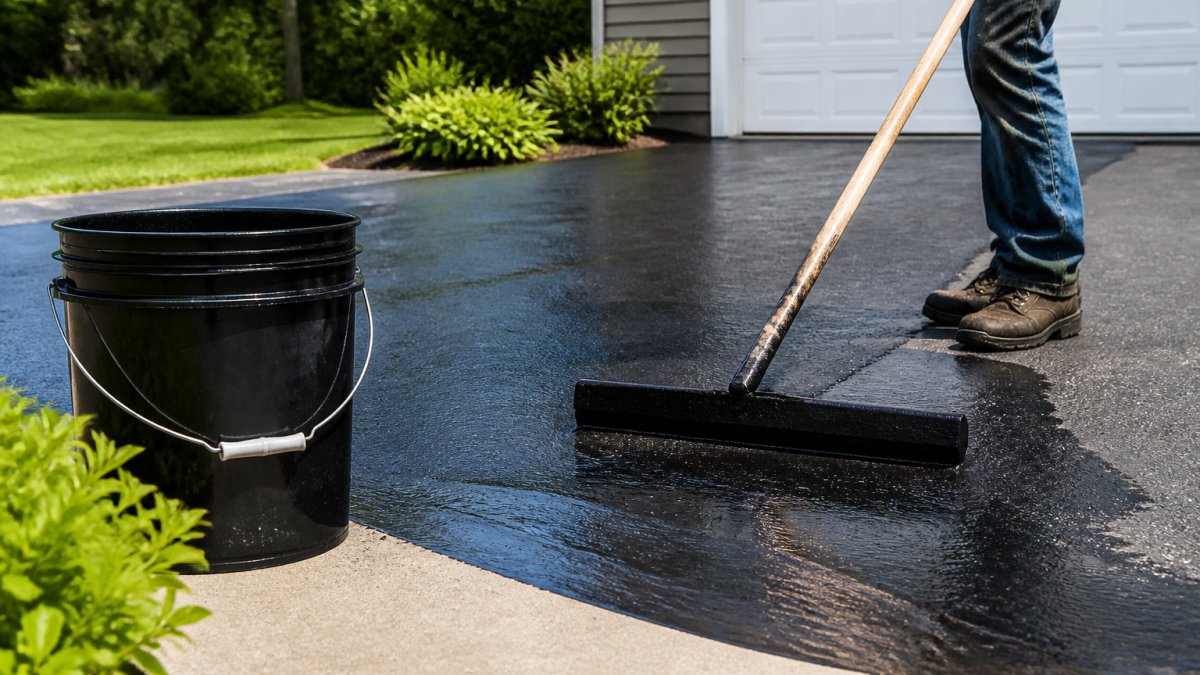
Commercial asphalt sealcoating remains the workhorse of preventive care. A quality sealcoat blocks water, sun, and chemical damage before it reaches the base. Done on schedule, it stretches the years between resurfacing.
The Asphalt Pavement Alliance notes that preventive maintenance protects the investment in paved surfaces. It costs far less than a rebuild. Pair sealcoating with crack filling and prompt pothole repair, and the surface stays serviceable far longer than a reactive approach allows.
Parking Lot Drainage Solutions That Protect Your Investment
Parking lot drainage solutions decide whether water leaves the lot or sits and eats it. Ponding water softens the base, speeds cracking, and turns a small repair into a big one.
What to check:
Water that ponds more than 24 hours after rain
Clogged catch basins and inlets
Settled areas that trap water against the building
Missing or broken curbing that redirects flow
We regrade low spots and clear inlets so water moves off the surface fast. For practical fixes, see our guide to smart drainage solutions for your driveway and parking lot.
Prioritizing Pavement Upgrades With a Condition Assessment
A condition assessment helps you decide what to fix first. You can rate each area of the lot and compare the cost of repairs against the value they protect. This is how property managers stretch a budget across a whole portfolio, and how owners walk into a sale or refinance with evidence instead of anecdotes.
Step 1: Map and Rate the Lot
Walk the lot and divide it into sections, typically by drive aisle, parking field, entrance, and loading zone. Rate each section for cracking, potholes, drainage, and striping on a 1-to-5 scale, with 1 as failed and 5 as like new. Photograph each section and note the last sealcoat or resurfacing date. The output is a simple condition map that any contractor or appraiser can read.
Step 2: Attach Cost Ranges to Each Fix
Contact Advanced Paving and Sealcoating, Inc. for a quote on any of these fixes; pricing depends on subgrade, access, and phasing.
Fix | Typical cost range | When it applies |
Crack filling | $0.50-$2 per linear ft | Isolated cracks under a quarter inch |
Pothole and patch repair | $150-$500 per patch | Small failed areas, sound surrounding base |
Sealcoating | $0.15-$0.30 per sq ft | Routine care every 2-3 years |
Striping and restriping | $0.10-$0.30 per sq ft | Faded markings, layout changes |
Mill-and-overlay resurfacing | $2-$5 per sq ft | Widespread wear, sound base |
Full-depth repair or reconstruction | $8-$14 per sq ft | Alligator cracking, base failure |
Step 3: Estimate the Payback
Payback is easiest to see in three places: avoided deferred-maintenance discounts, rent and occupancy outcomes, and reduced liability exposure.
Avoided discount. A buyer or appraiser who spots failed pavement may treat it as a deferred capital cost and subtract a repair estimate from the offer.
Liability. Trip-and-fall and vehicle claims tied to uneven pavement, missing curb ramps, and worn striping carry direct costs and insurance implications. Correcting them is both a safety and a valuation move.
Key Takeaway A practical rule: fix the lowest-scoring sections first, then sealcoat everything on schedule. Spending on a failed section before cosmetic work protects the base; spending on cosmetics first usually wastes money that the next winter undoes.
Step 4: Build a Phased Budget
Rank projects by condition score and payback, then phase them across two or three budget cycles. Keep a written record of the assessment, the bids, and the completed work, that file is exactly what an appraiser or buyer wants to see, and it substantiates the value claim better than any brochure. For a deeper look at how paving shapes first impressions, read our guide on boosting your property's curb appeal with professional asphalt paving.
Frequently Asked Questions
How do pavement upgrades affect commercial property value?
Pavement upgrades affect value through three channels: appearance, function, and risk. A clean, well-striped lot improves curb appeal and tenant satisfaction, which supports rental rates and occupancy. Functional layout and drainage protect the asset from water damage and premature failure. And fewer trip hazards and ADA violations reduce liability exposure. Appraisers and buyers weigh all three when pricing a property, so documented maintenance records and visible condition both matter.
When should a commercial parking lot be resurfaced?
Resurfacing makes sense when the surface is weathered but the base is still sound. Warning signs include widespread alligator cracking, raveling, and multiple patches that keep failing. If you see depressions, rocking slabs, or cracks wider than a quarter inch, the base may need repair first. A condition assessment separates surface problems from structural ones, so you resurface once instead of paying twice.
Is commercial asphalt sealcoating worth it for a parking lot?
Sealcoating is one of the lowest-cost preventive steps you can take. It blocks UV damage and water intrusion, which are the two biggest causes of asphalt breakdown, and it restores a uniform black finish that reads as well-maintained. The catch is timing: sealcoat only after cracks are filled and potholes are patched, and allow new asphalt to cure first. Skipping prep work wastes the coating.
Which parking lot improvements add the most value to a commercial property?
Start with safety and function, then appearance. Pothole repair, crack filling, and drainage fixes protect the asset and reduce liability. Fresh striping, ADA-compliant spaces, and clear signage improve traffic flow and customer experience. Sealcoating and resurfacing round out the package. A condition assessment ranks these by urgency and cost, so you spend on the projects that protect value first.
Most commercial lots lose value quietly, one crack and one ponding puddle at a time. Advanced Paving and Sealcoating, Inc. can reverse that. We offer sealcoating, patching, striping, and full paving backed by more than 20 years of experience, a family-owned team, and 24/7 emergency response. Get a free estimate from Advanced Paving and Sealcoating, Inc. and put your pavement to work for your property value.
Comments