
7 Curb Appeal Upgrades That Keep Commercial Tenants
Last Updated: October 31, 2026
Quick Summary
Curb appeal drives commercial tenant retention because tenants read exterior condition as proof the property is actively managed. A cared-for lot, entrance, and signage signal stability, while visible neglect feeds complaints and perceived risk that push tenants toward non-renewal. Exterior work is the one retention lever you can control without renegotiating a lease.
Tenants rarely cite curb appeal when leaving, but exterior complaints appear months before non-renewal.
Inspect commercial parking lots at least twice a year, in spring and fall, plus after storms.
Patch first, then seal, then stripe; sealing over unpatched cracks traps moisture and shortens repair life.
Match exterior spend to tenant type: retail weights signage visibility, industrial weights truck court condition.
Score projects on visibility, risk removal, and speed, then fix the highest scorers first.
Table of Contents
Why Curb Appeal Drives Commercial Tenant Retention
A tenant signs a lease based on a promise.
At Advanced Paving and Sealcoating, Inc., we have spent more than 20 years on commercial lots and driveways across Central Illinois.
**Tenants do not renew because a property is beautiful.
Curb appeal is a retention signal, and one of the few a property manager can control on a predictable schedule.
Commercial Property Curb Appeal: What Tenants Notice First
Commercial property curb appeal is the combined first impression of a site's exterior: the landscaping, pavement, building face, entrances, lighting, and signage a visitor sees before ever stepping inside.
When property managers walk their properties, the following areas tend to stand out:
The pavement. Cracks, potholes, and faded striping register before anything else.
The entrance. A dirty door or worn threshold reads as neglect.
The lawn and beds. Overgrown edges say nobody is watching.
Curb appeal is closer to operations than marketing: tenants compare the property to how it looked when they signed. For how lot condition shapes business image and safety, see our guide on effective parking lot maintenance.
Landscaping, Entrances, and Signage: The First-Impression Checklist
Use this checklist as a walkthrough order. It covers the three areas tenants judge fastest.
Landscaping and Seasonal Maintenance That Signals Care
Landscaping is the cheapest proof of attention a property can buy. Mowed edges, fresh mulch, and trimmed trees say a crew was here recently. That matters more than plant selection.
A common mistake is a big spring cleanup followed by months of nothing. Seasonal maintenance should run on a calendar, not a mood:
Mow and edge on a fixed weekly or biweekly schedule
Refresh mulch beds in spring and again in fall
Prune trees and shrubs away from walks, signs, and lighting
Entrances, Doors, and Signage Tenants Read as Professional
The entrance is where a tenant's customers decide what kind of business operates there. Clean glass, working door closers, and readable signage do quiet work every day.
Faded striping in the entry drive and a worn threshold undo a clean lobby faster than most managers expect. Our parking lot striping and maintenance guide covers what precision work looks like.
Commercial Parking Lot Maintenance as a Retention Tool
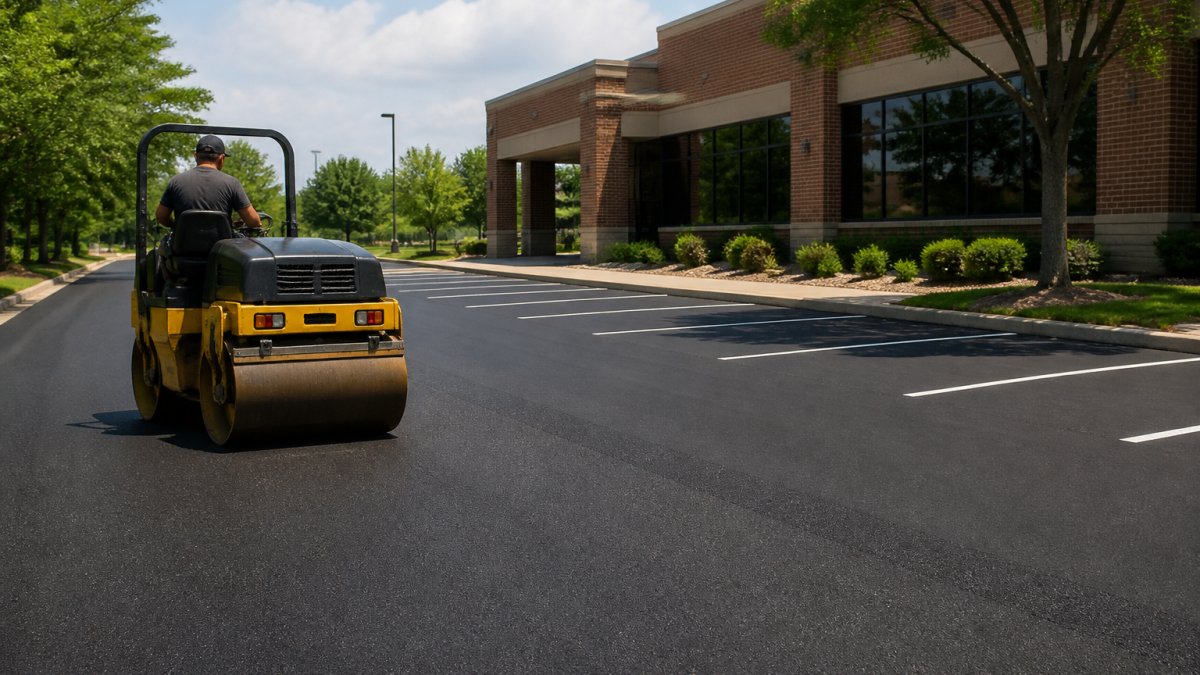
Commercial parking lot maintenance is the scheduled work that keeps a lot safe, visible, and structurally sound: sealcoating, patching, striping, and inspection.

Parking is where tenants spend their first and last minute on site. Fresh sealer and sharp lines feel managed; alligator cracking and faded stalls feel like a property waiting to be sold.
Sealcoating, Patching, and Striping That Protect First Impressions
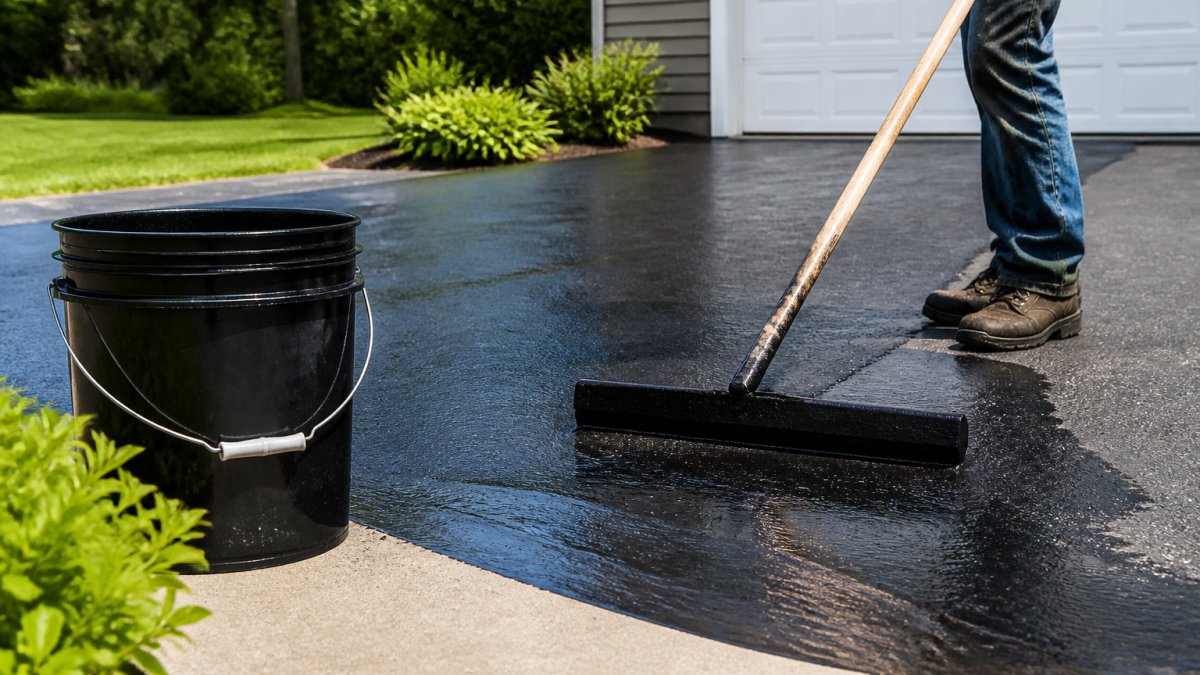
Sealcoating helps keep asphalt dark and uniform, patching addresses trip hazards, and striping keeps traffic organized.
These three work as a package: sealing over unpatched cracks traps the problem, and striping a lot that needs patching wastes paint. Our article on how often to sealcoat commercial parking lots explains the right interval.
How Often Should a Commercial Parking Lot Be Inspected?
Many property managers inspect commercial parking lots at least twice a year, in spring and fall, and after freeze-thaw cycles or heavy storms.
The spring inspection catches winter damage before it spreads; the fall inspection clears debris and seals cracks before water freezes inside them.
A practical inspection walks the lot in this order:
Drive the entrance and exit lanes
Walk every stall row and note cracks and depressions
Check drains and low spots for standing water
Review striping, signage, and lighting together
Photograph and date every issue you find
Keep those photos. They build a maintenance record you can show a tenant at renewal.
Commercial Tenant Retention Strategies That Start Outside
Most retention advice lives inside the lease: renewal options, rent escalators, tenant-improvement allowances. The exterior rarely makes the list, which is a mistake. The exterior is the one part of the tenant experience a property manager can change without renegotiating a single lease term.
The Mechanism: Why Exterior Condition Reaches the Renewal Decision
A renewal decision is rarely one conversation. It is the accumulation of small signals over months, and exterior condition feeds that accumulation in three ways:
Employee and customer complaints. A pothole that damages a customer's car, a dark corner an employee avoids at night, a cracked walkway someone trips on, each becomes a story the tenant's leadership hears. Unresolved stories become reasons to look elsewhere.
Perceived stability. A property that looks cared for reads as financially stable. A property with alligator cracking and faded striping reads as one that may be sold, refinanced, or deferred. Tenants factor that perceived risk into renewal math even when they never say so out loud.
Comparison pressure. When a tenant's leadership tours a competing property with fresh sealcoat, sharp striping, and clean entrances, the comparison is immediate. The current property's exterior is the reference point they measure against.
Tenants rarely cite curb appeal as the reason they leave, but exterior complaints frequently appear in the months before a non-renewal. The exterior is a leading indicator, not usually the stated cause.
What Different Tenant Types Actually Notice
Curb appeal is not one signal. It is a set of signals weighted differently by tenant type. A property manager who treats all tenants the same misses the priorities that drive each one's renewal decision.
Tenant Type | What They Weight Most | Exterior Priorities |
Office | Employee experience and client impression | Clean entrances, well-lit walkways, manicured landscaping, clear signage |
Retail | Customer visibility and access | Pylon and monument signage visibility, parking availability, striping clarity, entrance sightlines |
Industrial | Loading access and safety | Truck court condition, dock approach pavement, drainage, lighting for early and late shifts |
Medical | Accessible routes and patient confidence | ADA-compliant paths, smooth walkways, covered drop-off, clear wayfinding, well-lit parking |
A retail tenant will tolerate a worn back wall but not faded pylon signage that hides their brand from the street.
A Practical Measurement Framework
Property managers who want to defend exterior spend at budget time benefit from a before-and-after record. Track these five metrics quarterly:
Renewal rate by tenant type. Segment renewals so you can see whether exterior work correlates with retention in a specific category.
Vacancy duration. Average days from move-out to new lease. Shorter durations after improvements suggest the exterior is helping leasing velocity.
Tenant satisfaction scores. Add two or three exterior-specific questions to your annual survey: parking lot condition, lighting, landscaping, entrance appearance.
Maintenance request volume by category. Track exterior-related requests separately from HVAC, plumbing, and interior work. A drop in exterior requests after scheduled work is measurable evidence.
Leasing cost per signed lease. If exterior improvements shorten tours-to-lease time, the cost per signed lease falls even when marketing spend stays flat.
Pro Tip Start the log before the work, not after. A baseline captured the week before a sealcoat and striping project is worth more at renewal time than a year of after-the-fact impressions.
Realistic Caveats
Exterior condition is one input among many; rent, lease terms, location, and interior buildout all weigh heavily. Fresh striping will not save a lease that is priced wrong, but the exterior can remove the complaints and perceived risks that push a tenant toward looking, and give the owner credible evidence the property is actively managed.
Shared Responsibility: Who Owns What
Retention through curb appeal works best when responsibility is written down. A common split:
Owner: structural pavement, drainage, building envelope, parking lot lighting fixtures.
Property manager: service schedules, inspections, vendor coordination, photo logs.
Tenant: storefront glass, entry mats, signage within their demise, keeping their dumpster area clear.
Shared, documented standards keep the exterior consistent between capital projects, which is when retention risk is highest.
When you are ready to act on the first tier of exterior work, our complete guide to commercial asphalt repair for businesses walks through the repair options in detail.
Prioritizing Upgrades by Cost, Impact, and Timeline
The properties that retain tenants best are not the ones that spend the most on curb appeal. They sequence spend so the highest-visibility, highest-risk items get done first and long-cycle capital work gets planned instead of panicked.
The Decision Matrix
Score each candidate project on three axes, each on a simple 1-to-3 scale:
Visibility: How often do tenants and their customers see it? (Daily = 3, weekly = 2, rarely = 1)
Risk removal: Does it eliminate a safety, liability, or accessibility hazard? (Yes, direct = 3; indirect = 2; no = 1)
Speed: How fast can it be completed without disrupting tenants? (Days = 3, weeks = 2, months = 1)
Multiply the three scores. Projects that score high on all three, visible daily, remove a hazard, and can be done quickly, belong in the current quarter. Projects that score high on visibility but low on risk removal can wait for the seasonal plan. Projects that score low on visibility but high on risk removal (drainage, structural pavement) belong in the capital budget even though tenants will never compliment them.
Project | Visibility | Risk Removal | Speed | Score | Phase |
Pothole patching at entrance drive | 3 | 3 | 3 | 27 | Fix now |
Restripe front parking rows | 3 | 2 | 3 | 18 | Fix now |
Repair dead parking lot lighting | 3 | 3 | 2 | 18 | Fix now |
Sealcoat and crack fill | 3 | 2 | 2 | 12 | Plan this season |
Landscaping refresh and mulch | 2 | 1 | 3 | 6 | Plan this season |
Entrance sign replacement | 3 | 1 | 2 | 6 | Plan this season |
Drainage correction at low spots | 1 | 3 | 1 | 3 | Budget next year |
Full repave of rear lot | 2 | 2 | 1 | 4 | Budget next year |
Scores are a starting point, not a verdict. A property with an active trip-and-fall claim should move every hazard-removal item to the top regardless of visibility score.
A Phased Approach That Fits a Real Budget Cycle
Most commercial properties do not have a single line item for curb appeal. They have a repair budget, a capital budget, and an emergency reserve. Phasing exterior work to match those buckets is what makes it actually happen.
Quarter 1 (fix now): Hazard removal, potholes, trip hazards, dead lighting, broken signage. These come out of the repair budget and should be scheduled within days of identification.
Quarters 2-3 (plan this season): Sealcoating, crack filling, striping, landscaping refresh, entrance cleanup. Bundle these into one mobilization to reduce cost and tenant disruption.
Quarters 3-4 and next year (budget): Drainage correction, entrance rebuilds, full repaving. These require capital approval and should be scoped with a pavement condition assessment so the request is defensible.
Watch Out The most common sequencing mistake is sealing a lot before patching it. Sealer over an unpatched crack traps moisture and shortens the life of the repair. Patch, then seal, then stripe, in that order, every time.
Accessibility, Safety, and Climate Resilience
Three considerations cut across every project and are routinely underweighted in curb appeal planning:
Accessibility. Accessible routes from parking to entrance must stay clear, level, and free of cracks and heaved slabs. A beautiful entrance with a rough accessible path is a liability, not an asset. Include accessible-route inspection in every walkthrough.
Safety and visibility. Lighting, sightlines, and clear striping reduce the dark corners and blind spots that generate tenant complaints. Lighting failures should be treated as hazard-removal items, not cosmetic ones.
Climate resilience. In freeze-thaw climates, water is the primary destroyer of pavement. Drainage correction, crack sealing before winter, and durable materials reduce the cycle of repair-and-replace that eats capital budgets. Native or climate-appropriate planting reduces irrigation and replacement costs over time.
These three are also risk-management items. Documenting accessible-route condition, lighting function, and drainage performance gives a defensible record if a claim arises, and a credible story at renewal about how the property is managed.
Insider Notes From Two Decades of Commercial Work
Do the pavement before the paint. Sealcoating and patching first, striping last.
Bundle work. One mobilization for patching, sealing, and striping costs less than three separate visits.
Fix drainage before resurfacing. Water is what destroys new asphalt first.
Sequencing matters: curb appeal works best as a calendar of planned work rather than a set of reactive fixes.
Schedule a Commercial Property Walkthrough
The gap between a property that keeps tenants and one that loses them is usually a short list of exterior fixes nobody scheduled.
Advanced Paving and Sealcoating, Inc. is family-owned and has served commercial and residential properties for over 20 years.
For the full maintenance picture behind curb appeal, our commercial parking lot maintenance guide covers inspections, sealcoating, and asphalt repair schedules in one place.
Get started with Advanced Paving and Sealcoating, Inc. and give your tenants a property that looks as reliable as the lease they signed.
Frequently Asked Questions
How does curb appeal affect commercial tenant retention?
Curb appeal sets the tone before a tenant ever reaches the door. A clean parking lot, trimmed landscaping, and clear signage signal that ownership maintains the property, which supports tenant satisfaction and lease renewal decisions. Property managers who treat exterior upkeep as part of commercial tenant retention strategies rather than a cosmetic afterthought tend to see fewer complaints and stronger long-term relationships with tenants.
What exterior improvements make commercial properties more appealing to tenants?
Start with the surfaces tenants use daily: parking lot sealcoating, pothole patching, and fresh striping. Then address entrances, lighting, and signage so the building reads as professional after dark. Landscaping and seasonal lawn care round out commercial property curb appeal. These fixes are budget-friendly compared with interior renovations and directly affect how tenants and their visitors judge the property.
How often should a commercial parking lot be inspected?
Walk the lot monthly for cracks, potholes, and fading stripes, and schedule a professional inspection at least twice a year, ideally in spring and fall. High-traffic lots or lots in freeze-thaw climates may need quarterly checks. Regular commercial parking lot maintenance catches small failures before they become expensive repairs and keeps the property looking cared for between lease renewal conversations.
Does a well-maintained property help attract and retain commercial tenants?
Yes. Tenants compare properties during site tours, and exterior condition is one of the first things they evaluate. A lot free of potholes, clean walkways, and working lighting reduce liability risk and daily frustration. Pairing those upgrades with a written maintenance plan shows prospects and current tenants that ownership takes the property seriously, which supports tenant attraction and loyalty over the lease term.
Comments