
7 Factors That Shorten Asphalt Driveway Life in Illinois
Quick Summary
In Illinois, asphalt driveway lifespan is commonly estimated at 15 to 20 years, though published ranges vary. Freeze-thaw cycles, drainage, base preparation, and maintenance all shift where a given driveway lands within that range.
Illinois Ready Mixed Concrete Association reports asphalt driveways typically endure 15 to 20 years.
Water entering cracks drives much of the damage, and freeze-thaw cycles repeatedly widen those cracks.
Do not sealcoat a driveway that is holding water or showing alligator cracking; fix drainage and base first.
The Village of Schaumburg guide specifies at least 3 inches of asphalt over 6 inches of compacted stone base.
Sealcoat every two to three years and fill cracks each spring and fall before freeze-thaw season.
Table of Contents
How Long an Asphalt Driveway Typically Lasts in Illinois
Most asphalt driveways in Illinois will not last as long as the sales pitch suggests, and the reasons are mostly local. The asphalt driveway lifespan in Illinois depends on the climate, the soil underneath, and how the surface is maintained. Published estimates vary widely. One source gives a typical range of 15 to 30 years, while the Illinois Ready Mixed Concrete Association reports that asphalt driveways typically endure 15 to 20 years (Illinois Ready Mixed Concrete Association guidance on concrete versus asphalt durability). Neither range applies to every driveway. Treat any single number as a starting point, not a promise.
A driveway that gets sealed on schedule, drains properly, and sits on a solid base can outlast one that is neglected on all three counts. The seven factors below explain where that gap comes from, and what you can do about each one.
How Freeze-Thaw Cycles Break Down Pavement
Freeze-thaw cycles are one of the main reasons asphalt wears out faster in this part of the country. Water that soaks into small cracks freezes, expands, and pushes the surface apart. When it thaws, the gap widens. Repeat that dozens of times a winter and small defects become structural damage.
Wolf Paving identifies freeze-thaw cycles, together with the soil beneath the base stone, as major factors in pavement life (Wolf Paving guidance on extending asphalt pavement lifespan). The practical takeaway is simple: sealing and crack filling before winter can address water pathways associated with freeze-thaw damage.
Why Drainage and Water Intrusion Cause Most Driveway Damage
Water is the root cause of most driveway failure, and in this region the mechanism is more specific than generic 'water damage' advice suggests.

Total Paving makes the same point for Illinois specifically, noting that water entering cracks or porous pavement drives much of the damage (Total Paving analysis of Illinois winters and driveway damage).
Where the water actually comes from
Most homeowners blame rain, but the biggest contributors are usually site-specific:
How to diagnose it before it becomes structural
A short walk-around after a heavy rain tells you most of what you need to know. Look for standing water that lingers more than a day, staining or damp soil along the edges, and any crack where you can see the base material below. Inside the driveway, alligator cracking in a defined area usually means the base under that spot has failed, while long cracks running with the pavement often trace back to a joint or a grade change. If the surface feels spongy or you hear a hollow sound when you walk it, water has likely reached the base.
What fixing drainage actually involves
Watch Out Do not sealcoat a driveway that is holding water or showing alligator cracking. Sealing traps moisture in the base and can make the failure worse. Fix the drainage and the base first, then seal.
If you already see water damage or sudden failure, do not wait for the next season. Learn the signs of failure and how fast emergency repairs can happen.
Why Base Preparation and Construction Design Matter
Much of a driveway's lifespan is decided before the first layer of asphalt goes down. The Illinois Asphalt Pavement Association recommends full-depth asphalt for driveways, and the Village of Schaumburg's driveway guide specifies at least 3 inches of asphalt over 6 inches of compacted stone base (Illinois Asphalt Pavement Association driveway recommendations). A thin surface laid over poor subgrade will fail early no matter how well it is maintained later.
When you evaluate a new driveway or a repair, ask what the base depth is, how it was compacted, and whether the subgrade was stabilized.
How Traffic Weight and UV Oxidation Wear Down the Surface
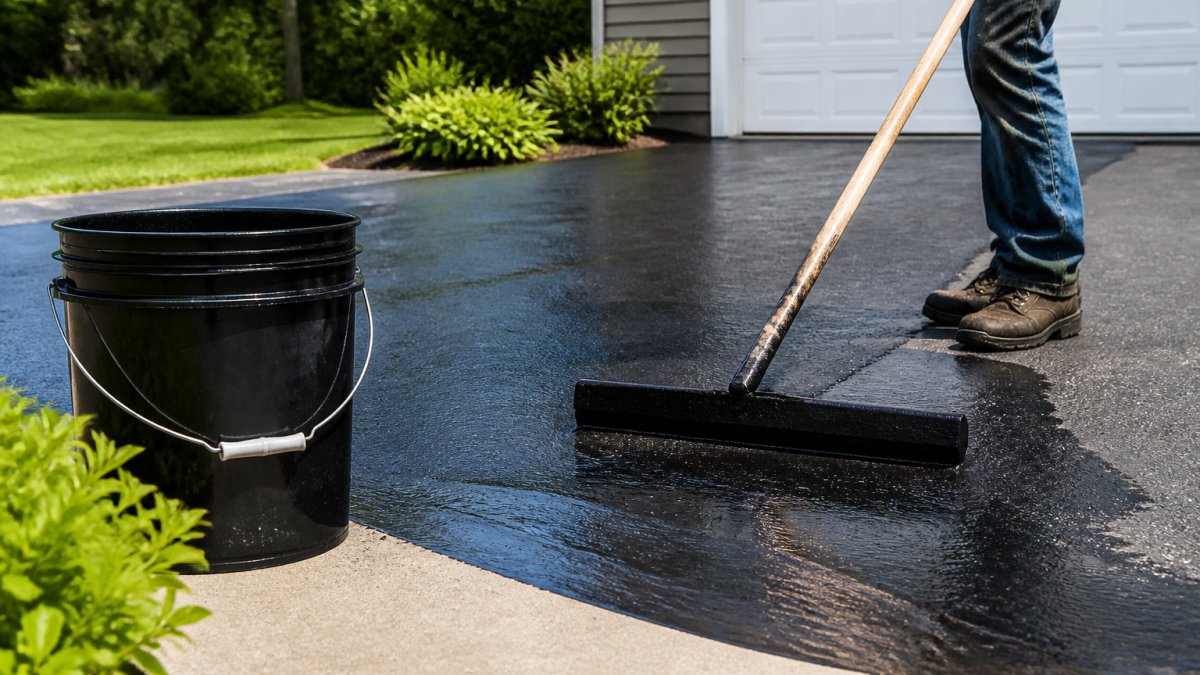
Sealcoating slows oxidation and protects the surface from fuel spills and chemicals. For driveways that carry heavy loads, a sealcoat schedule matters more, and any high-stress spots should be inspected each season.
How Often to Sealcoat and How Much Repair Costs
The more useful question for a homeowner is not the interval itself but whether the maintenance spend is worth it compared with replacement. Framing it as a return-on-investment decision is the part most guides skip.
The maintenance-vs-replacement math
A practical way to think about it:
Poor condition (alligator cracking over large areas, rutting, base failure, multiple potholes): patching becomes recurring and the money is better put toward reconstruction.
What drives the price of each service
Sealcoating cost depends on the size of the area, the condition of the surface, whether crack repair is needed first, and how much prep (cleaning, edge trimming, priming) the job requires. Read the full guide to sealcoating timing, cost, and DIY versus pro. Crack filling is priced by the linear foot and by whether cracks are routed and cleaned before filling. Patching and sectional repair are priced by area and by how much base must be removed and rebuilt. Because these variables swing widely from one driveway to the next, any per-square-foot number you see online is a rough starting point at best.
Why an on-site assessment beats a phone estimate
For current pricing, contact Advanced Paving and Sealcoating, Inc. for a quote. Compare repair versus replacement costs for your driveway to see what a realistic budget looks like.
The article's maintenance-versus-replacement factors can be scanned at a glance:
Condition | What it suggests |
Alligator cracking over large areas | Base failure; patching becomes recurring |
Rutting | Base failure; patching becomes recurring |
Multiple potholes | Base failure; patching becomes recurring |
Standing water lingering over a day | Drainage problem; fix before sealing |
Building a Maintenance Schedule That Protects Your Investment
A simple schedule prevents most of the damage described above. Here is a practical starting point for an Illinois driveway:
Each spring: Inspect for winter damage, fill new cracks, and check drainage.
Every two to three years: Sealcoat the surface, more often for high-traffic areas.
Each fall: Seal cracks and clear debris before freeze-thaw season begins.
After any heavy load or spill: Inspect the affected area and address damage promptly.
Keeping a written log of inspections and repairs also helps you track trends and plan larger projects before they become emergencies.
Scheduling a Driveway Assessment With Advanced Paving and Sealcoating
If your driveway is showing cracks, standing water, or early signs of failure, a professional assessment can help determine what it needs. Our team is family-owned and has served Central Illinois for over 20 years, and we are available 24/7 for emergency repairs. Meet our local, family-owned paving team to learn more about who will be working on your property, and request your assessment and free estimate to get a clear picture of what your driveway needs now.
GET A FREE ESTIMATE
Frequently Asked Questions
How long does an asphalt driveway typically last in Illinois?
Published estimates vary. One source gives a typical range of 15 to 30 years, while the Illinois Ready Mixed Concrete Association says asphalt driveways typically endure 15 to 20 years. Neither range applies to every driveway. Base quality, drainage, climate exposure and maintenance all shift the result.
How do freeze-thaw cycles affect asphalt driveways?
Water that gets into cracks or porous pavement freezes, expands and then thaws, which widens the damage each winter. Wolf Paving identifies freeze-thaw cycles, together with the soil beneath the base stone, as main factors in pavement life.
How often should an asphalt driveway be sealcoated?
Visit the website or request a free estimate for current pricing.
What does asphalt driveway repair cost?
Repair cost depends on the extent of damage, the area involved, and the materials and labor required, so no single figure applies. Request a free estimate from Advanced Paving and Sealcoating, Inc. for pricing based on your specific driveway.
Comments