
What Happens If You Skip Asphalt Maintenance
Table of Contents
How Asphalt Deteriorates Without Routine Care
UV exposure and oxidation
Water intrusion and freeze-thaw damage
Asphalt Driveway Maintenance: The Foundation of Prevention
Early warning signs of neglect
Inspection checklist for property owners
Asphalt Crack Repair: Why Timing Matters
Small cracks become potholes
Structural damage beneath the surface
How Often to Sealcoat an Asphalt Driveway
Maintenance schedule by pavement age, traffic, and climate
Climate and traffic adjustments
Timing and application best practices
Decision tree for your property
The Real Cost of Deferred Maintenance
Emergency repairs vs. preventive action
Safety, liability, and accessibility consequences
Prioritizing Maintenance Tasks in the Right Order
Step 1: Address standing water and drainage
Step 2: Seal active cracks before they expand
Step 3: Apply sealcoating for surface protection
Frequently Asked Questions
Last Updated: October 5, 2026
How Asphalt Deteriorates Without Routine Care
When you skip asphalt maintenance, your pavement doesn't just sit idle. It actively breaks down. The surface begins to fail in predictable stages, and each stage costs more to fix than the last.
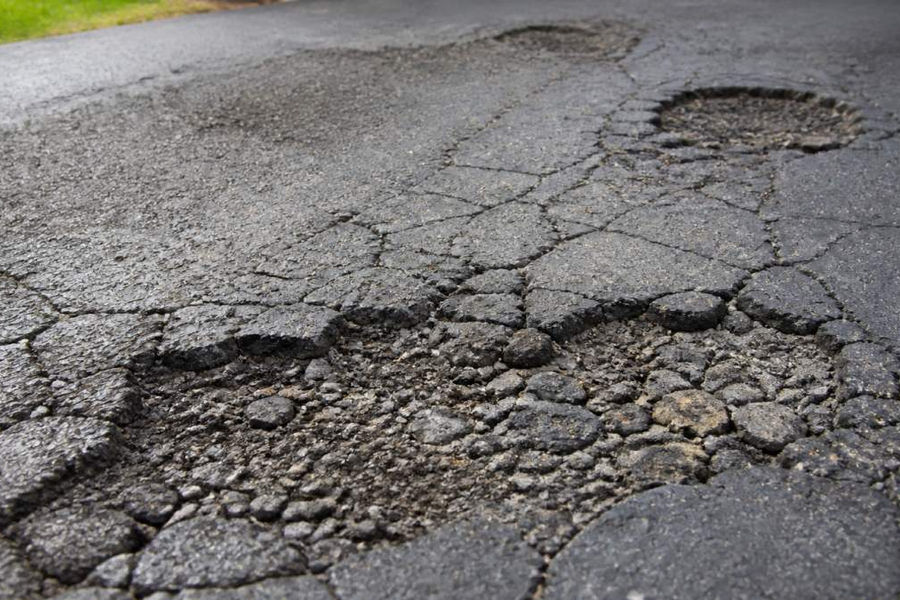
Asphalt deteriorates in predictable stages: UV rays harden the surface, water seeps through cracks, freeze-thaw cycles expand damage, and hairline cracks become potholes, then structural failure.
Properties that skip routine maintenance face exponential repair costs within 5-10 years.
UV exposure and oxidation
Sunlight hardens asphalt through oxidation, drying out the binder and causing the surface to turn gray and lose flexibility. Sealed surfaces reflect UV rays and last significantly longer than unsealed ones.
Pro Tip Sealcoating every 2-3 years slows oxidation dramatically. It's the single most cost-effective preventive step you can take.
Water intrusion and freeze-thaw damage
Water penetrates cracks and reaches the base layer. In winter, frozen water expands, heaving the pavement. Repeated freeze-thaw cycles separate the surface from the base, forming potholes and structural failure. Deferred maintenance accelerates this by leaving cracks unsealed and potholes unrepaired.
Watch Out Once water reaches the base layer, repairs become expensive. Patching alone won't fix subsurface damage, you'll need excavation and reconstruction.
Asphalt Driveway Maintenance: The Foundation of Prevention
Routine maintenance catches issues early when they're cheap to fix. Regular care extends pavement life to 15-20 years; neglected pavement fails in 5-7 years.
Early warning signs of neglect
Look for these signs that your asphalt maintenance schedule is falling behind:
Fading or graying surface, oxidation is progressing; not urgent but indicates sealcoating is needed within 12 months
Small cracks (hairline to 1/4 inch), water intrusion is beginning; schedule crack sealing within 30 days
Widening cracks (1/4 to 1/2 inch), active water penetration; seal within 2 weeks to prevent rapid expansion
Alligatoring, a pattern of interconnected cracks that resemble alligator skin; indicates base layer stress and requires professional assessment for patching or resurfacing
Potholes, structural damage is already present; repair immediately to prevent expansion and vehicle damage
Standing water, drainage problems are developing; assess and correct slope or drainage within 30 days
Raveling, surface aggregate is breaking loose and washing away; indicates the surface is near end-of-life and resurfacing should be planned within 6-12 months
Soft spots or spongy areas, base layer deterioration underneath; professional inspection needed to determine if patching or full reconstruction is required
Edge crumbling or spalling, pavement edges are breaking apart; seal or patch edges to prevent water from entering the base layer
Key Takeaway Catch cracks when they're hairline-thin. Once they widen past 1/4 inch, water penetration accelerates exponentially and repair costs jump from $10-30 per linear foot to $50-150 per hole or more.
Inspection checklist for property owners
Use this checklist twice yearly: spring after thaw and fall before cold weather. Document findings with photos and measurements to help contractors assess maintenance history.
Inspection Item | What to Look For | Severity | Action If Present | Timeline |
Surface cracks | Lines thinner than 1/4 inch | Low | Schedule crack sealing | Within 30 days |
Active cracks | Cracks 1/4 to 1/2 inch wide or visibly widening | Medium | Seal immediately to prevent expansion | Within 2 weeks |
Alligatoring | Interconnected crack pattern covering 10% or more of surface | High | Professional assessment; likely needs patching or resurfacing | Within 1-2 weeks |
Potholes | Bowl-shaped holes in surface, any size | High | Emergency repair needed; prevents vehicle damage and expansion | Immediately |
Standing water | Puddles that don't drain within 24 hours after rain | Medium | Assess drainage and slope; correct within 30 days | Within 30 days |
Fading/graying | Loss of black color across 25% or more of surface | Low | Plan sealcoating within 12 months | Within 12 months |
Raveling | Loose aggregate, rough texture, visible erosion | Medium-High | Surface protection urgent; sealcoating buys time but resurfacing likely needed within 1-2 years | Within 6 months |
Edge deterioration | Crumbling at pavement edges, separation from adjacent surfaces | Medium | Seal edges or patch to prevent water entry into base layer | Within 60 days |
Soft spots | Areas that feel spongy or flex under foot pressure | High | Professional inspection required; indicates base layer saturation | Within 1-2 weeks |
How to prioritize: If you find multiple issues, address them in this order: (1) standing water and drainage first, (2) potholes and soft spots second, (3) active cracks third, (4) sealcoating fourth.
When to call a professional: If you see alligatoring, potholes, soft spots, or cracks wider than 1/2 inch, contact a paving contractor for a formal assessment. These signs indicate damage beyond DIY observation and may require excavation or resurfacing decisions that need professional judgment.
Asphalt Crack Repair: Why Timing Matters
Delaying crack repair by six months can cost hundreds of dollars more. A $50 crack seal becomes a $500 pothole patch, which becomes a $2,000 base layer replacement.
Small cracks become potholes
A hairline crack allows water to enter and soften the base layer. Traffic pressure widens it: within one season a 1-inch crack becomes 6 inches; within two seasons it's a pothole. Potholes expand rapidly under vehicle weight, damaging suspension and spreading damage to surrounding pavement.
The cost escalates at each stage:
Crack sealing: $10-30 per linear foot
Pothole patching: $50-150 per hole
Base layer repair: $500+ per area
Full resurfacing: $2-5 per square foot
One untreated crack can trigger a chain reaction of failures across your entire driveway.
Structural damage beneath the surface
Water intrusion causes hidden subsurface damage: the base layer weakens, the subgrade saturates, and pavement loses support. Surface failure can be catastrophic, requiring excavation and reconstruction. Early intervention, crack sealing, sealcoating, and proper drainage, prevents water from reaching the base.
Watch Out Subsurface damage is invisible until failure occurs. By then, the repair cost has tripled or quadrupled.
How Often to Sealcoat an Asphalt Driveway
Sealcoating frequency depends on climate, traffic, pavement condition, and drainage. Guidelines vary by pavement age, use patterns, and environmental stress.
Maintenance schedule by pavement age, traffic, and climate
New asphalt (0-2 years old): Wait for the asphalt to cure. In harsh climates with heavy UV or frequent freeze-thaw cycles, seal after year 1. In moderate climates, wait until year 2.
Young pavement (2-5 years old): Apply your first sealcoat to protect before oxidation accelerates. Light residential/moderate climates: seal at year 2-3, then every 3 years.
Mature pavement (5-10 years old): Inspect before sealing. If sound, sealcoat every 2-3 years (moderate climates) or every 2 years (harsh climates).
Aging pavement (10+ years old): If cracks, raveling, or soft spots appear, sealcoating won't extend life significantly, plan for resurfacing. If sound, seal every 1-2 years. Most pavements this age approach end-of-life within 2-5 years.
Climate and traffic adjustments
Cold climates: Seal every 2 years; prioritize crack sealing and drainage. Hot, sunny climates: Seal every 2-3 years; UV oxidation is the primary threat. Moderate climates: Seal every 3 years (light residential) or every 2-3 years (moderate use). High-traffic areas: Seal every 1-2 years. Poor drainage: Seal every 1-2 years and fix drainage first. Good drainage: Follow standard schedule. Excellent drainage: Extend intervals by 6-12 months.
Timing and application best practices
Sealcoat in spring or fall at 50-85°F. Schedule after crack sealing to prevent water from getting trapped under the sealcoat.
Pro Tip If your pavement shows multiple defects (cracks, soft spots, alligatoring), get a professional assessment before sealcoating. Sealcoating a failing surface is a temporary band-aid; addressing root causes (drainage, base layer repair) first is more cost-effective.
Decision tree for your property
How old is your pavement? (0-2 / 2-5 / 5-10 / 10+ years)
What is your traffic level? (light residential / moderate residential / light commercial / heavy commercial)
What is your climate? (moderate / freeze-thaw / hot/sunny)
What is your drainage? (poor / good / excellent)
What is the pavement condition? (sound / minor cracks / alligatoring or soft spots / potholes)
If pavement is sound and drainage is good, use the schedule above. If pavement shows damage (alligatoring, soft spots, potholes) or drainage is poor, address those issues first before sealcoating. Sealcoating is a protective measure for healthy pavement, not a cure for structural problems.
The Real Cost of Deferred Maintenance
Skipping asphalt maintenance costs more than prevention. Sealcoating ($200-500) and crack sealing ($50-200) are preventive investments. Deferred maintenance forces emergency repairs costing 5-10 times more.
Emergency repairs vs. preventive action
Preventive approach:
Sealcoat every 2-3 years: $200-500
Crack sealing annually: $50-200
Total over 10 years: $2,500-7,000
Result: Pavement lasts 15-20 years
Deferred maintenance approach:
Skip sealcoating and crack sealing for 5 years
Potholes form and spread
Base layer fails
Need full resurfacing: $3,000-8,000
Possible reconstruction: $5,000-15,000
Total cost: $8,000-23,000
Result: Pavement fails in 8-10 years
The math is clear. Prevention is cheaper than repair.
Safety, liability, and accessibility consequences
Beyond cost, deferred maintenance creates safety and legal risks.
Potholes damage vehicles. Cracked asphalt creates trip hazards. Deteriorated pavement affects accessibility for people with mobility challenges. Property owners can be held liable for injuries caused by poor pavement conditions.
A property manager responsible for a parking lot or driveway has a duty to maintain safe conditions. Neglected pavement creates liability exposure.
Deteriorated asphalt also affects property value. A well-maintained driveway or parking lot signals proper management. Cracked, potholed pavement signals neglect. This impacts curb appeal and tenant satisfaction.
Prioritizing Maintenance Tasks in the Right Order
Maintenance tasks have different urgency levels. This priority sequence protects your pavement most effectively:
Step 1: Address standing water and drainage
Water is the primary enemy. Fix drainage first: ensure proper slope, clear debris, fill low spots, and install/repair drainage systems. A few hundred dollars spent on drainage saves thousands in future repairs.
Step 2: Seal active cracks before they expand
Seal cracks to prevent water entry. Focus on cracks wider than 1/8 inch, active cracks, high-traffic areas, and edge cracks. Seal while small, don't wait for them to widen.
Step 3: Apply sealcoating for surface protection
Sealcoating is the final protective layer, reflecting sunlight and preventing water penetration. Apply every 2-3 years depending on climate and traffic, in spring or fall at moderate temperatures.
Pro Tip Schedule sealcoating after crack sealing is complete. Sealing cracks first ensures water doesn't get trapped under the sealcoat.
This three-step sequence addresses root causes first, then adds protective layers. It's the most cost-effective approach to asphalt maintenance.
Skipping asphalt maintenance leads to accelerating damage, escalating costs, and safety risks. The solution is straightforward: establish a maintenance schedule and stick to it.
Advanced Paving and Sealcoating, Inc. offers crack sealing, sealcoating, and emergency repairs. Contact us for a free estimate.
National Asphalt Pavement Association best practices for pavement preservation
Frequently Asked Questions
What happens if you don't sealcoat an asphalt driveway?
Without sealcoating, asphalt pavement loses its protective barrier and becomes vulnerable to UV exposure, water intrusion, and oxidation. The surface hardens and becomes brittle, allowing small cracks to form and expand. Water seeps into the base layer, weakening the subgrade and accelerating deterioration. Within a few years, minor cracks develop into potholes and raveling, requiring expensive patching or resurfacing instead of preventive maintenance.
Can small cracks in asphalt turn into potholes?
Yes. Small cracks allow moisture to penetrate the base layer beneath the surface. Freeze-thaw cycles expand this water, breaking down the base material and creating voids. As traffic load passes over the weakened area, the asphalt surface collapses into a pothole. What starts as a hairline crack can become a major safety hazard and structural failure within one or two winters if left unrepaired.
How often should you repair cracks in an asphalt driveway?
Address cracks as soon as you notice them, ideally within the same season. Small cracks (under 1/4 inch) should be sealed immediately to prevent water intrusion. Larger cracks require professional crack repair before they spread. Regular inspections every spring and fall help catch damage early. Pavement that receives sealcoating every 2-3 years typically requires fewer crack repairs because the protective layer prevents most new cracks from forming.
Is it more expensive to repair asphalt after delaying maintenance?
Significantly more expensive. Preventive maintenance like sealcoating and crack sealing costs a fraction of emergency repairs. Deferred maintenance allows damage to spread, requiring patching, resurfacing, or complete replacement. A small crack sealed promptly costs far less than removing and replacing an entire section of pavement damaged by water infiltration and freeze-thaw cycles. Property owners who skip routine care often face 3-5 times higher repair costs within a few years.
GET A FREE ESTIMATE


Comments