
What an Industrial Pavement Contractor Estimate Checklist Must Cover
Last Updated: November 21, 2026
Quick Summary
An industrial pavement contractor estimate checklist must cover contractor license and insurance, written scope with pavement type and thickness, site access and phasing, subgrade preparation, drainage, quantities and unit pricing, inclusions and exclusions, change order rates, and quality control tied to final payment. Confirm every line in writing before you sign.
Confirm the named insured on insurance certificates matches the company bidding the work.
Ask for square footage and tonnage in writing, then spot-check the math yourself.
An estimate that treats the whole lot as one uniform slab was not written for an industrial site.
Replace vague "repair as needed" language with defined limits before signing.
A bid 15% lower than the others is usually missing a line, not offering a discount.
What should your paving bid include?
We provide written asphalt paving, sealcoating, patching, and excavation estimates for Central Illinois properties.
Table of Contents
Why an Industrial Pavement Estimate Needs a Checklist
An industrial pavement contractor estimate checklist is a written set of items you confirm before signing, so the bid you accept matches the work your site actually needs.
That mistake costs more than the difference between bids. Industrial sites carry heavy vehicle traffic, loading dock traffic, and slow-moving loads that stress pavement in ways a residential driveway never will.
Below, we break down what each line of an estimate should cover, how to check quantities, and how to compare bids fairly.
The Asphalt Paving Estimate Checklist: Line by Line
Use this numbered list to review any estimate you receive. Each item should appear in writing, with a quantity or a clear description attached. The right-hand column tells you what to actually verify, not just whether the line exists, but whether it holds up.
# | Line item | What to verify before you accept it |
1 | Contractor identity and license | Legal business name matches the named insured on the insurance certificate; license number can be verified in the state registry |
2 | Insurance certificates | General liability and workers' compensation certificates come directly from the insurer, not a photocopy; limits are stated, not summarized |
3 | Project scope | Names pavement type, thickness, and repair methods, not "pave lot"; failed areas are defined by location and square footage |
4 | Site location and access | States where crews stage equipment, where material is hauled, and how loaded trucks enter and exit without crossing finished pavement |
5 | Project schedule and sequencing | Start date, phase boundaries, and completion window are dates, not "spring"; phased work identifies which areas stay open |
6 | Site inspection findings | Pavement condition, surface condition, and structural condition are described per area, with photos or core results referenced |
7 | Subgrade and soil preparation | Excavation depth, grading tolerances, and compaction method (lift thickness, passes, moisture) are specified |
8 | Drainage and water management | Inlet locations, slope percentages, and how ponding is prevented are named; drainage work is either included or explicitly excluded |
9 | Pavement materials and thickness | Base course and surface course thickness in inches; mix design or specification referenced by name |
10 | Quantities and units | Tonnage, square footage, and quantity takeoff are stated separately so you can check the math |
11 | Unit pricing and bid pricing | Cost per ton or per square foot is shown alongside the total; markup is either stated or you ask |
12 | Estimate inclusions and exclusions | Both lists are explicit; "as needed" language is replaced with defined limits |
13 | Change order terms | Added work is priced by a stated rate (per ton, per hour, or per square foot) and requires written approval before work proceeds |
14 | Quality control and final walkthrough | Testing method, workmanship standards, and sign-off checklist are named; final payment is tied to the walkthrough |
Contractor Qualifications and Insurance to Verify
Start with the basics: confirm the business license, insurance coverage, and workers' compensation certificate before you discuss price.
A common mistake is accepting a certificate that lists the contractor as an additional insured on someone else's policy. Our guide on how to hire a local asphalt paving contractor walks through the questions to ask and the red flags to watch for.
Quantities, Units, and Measurement Checks
Pavement estimates live or die on quantities. Ask for square footage and tonnage in writing, then spot-check the math yourself.
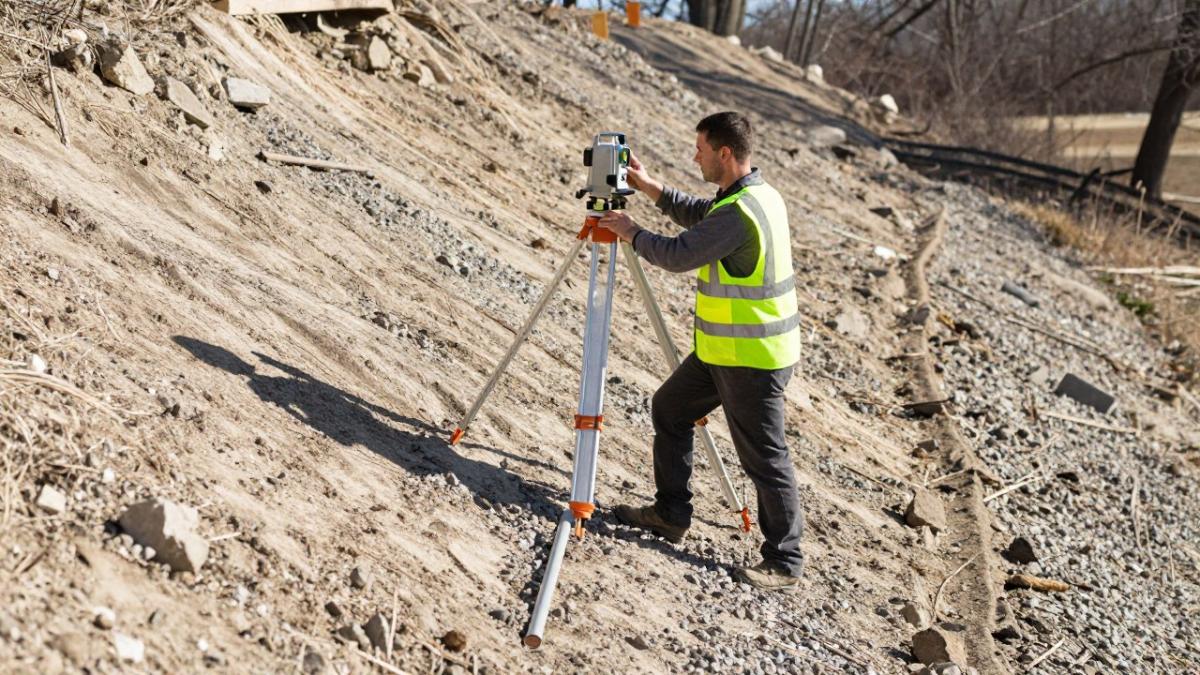
Measure the paved area and compare it to the stated square footage
Ask what pavement thickness the tonnage assumes
Confirm whether milling and excavation are measured separately
Watch out: a lump sum with no quantities cannot be compared to anything, and it is the most common way a low bid hides missing base repair. Push back before you sign.
Industrial Traffic and Operating Constraints
A residential checklist stops at square footage. An industrial estimate has to account for how the site actually operates, and the estimate should show it:
Heavy truck loads and turning areas, loading docks, truck aprons, and turning radii carry loads that stress pavement differently than a passenger-car aisle. A good estimate should address thicker sections or stronger base in those zones where loads demand it.
Loading dock aprons, these take static loads and repeated backing; ask whether the scope calls out a separate section for the apron.
Phased work and keeping the facility open, if the lot must stay operational, the estimate should name which areas close when, and how crews sequence paving so trucks can still reach docks.
If the estimate treats the entire lot as one uniform slab with no mention of truck routes or dock aprons, it was not written for an industrial site.
What an Asphalt Paving Scope of Work Should Spell Out
A scope of work is the written description of exactly what the contractor will build, remove, and leave behind. It should name the pavement type, thickness, and repair methods, not just "pave lot."
Watch out: vague scopes are where change orders begin. Ask for specific limits, such as "replace failed base in the first 40 feet of the north aisle." Defining those limits in writing also means understanding how construction contract terms allocate responsibility for hidden base failures and added work.
If you are weighing material options, our breakdown of asphalt vs concrete for industrial sites explains the trade-offs so you can judge whether the scope names the right pavement type.
Industrial Paving Contractor Questions to Ask Before You Sign
Ask these before signing anything:
Who is the on-site supervisor, and how do I reach them?
What happens if we find unsuitable subgrade after excavation?
How do you handle change orders, and who approves them?
Get the answers in writing. A verbal promise about base repair can be hard to enforce once work begins. Our guide to what to do when a paving contractor denies a claim covers your options if a dispute arises after sign-off.
Comparing Industrial Paving Bids Apples to Apples
Bids are only comparable when the scopes match. Normalize each proposal before you compare totals: line up inclusions, exclusions, quantities, and pavement thickness side by side. The worksheet below is the tool most buyers never build, and it is the fastest way to see which bid is actually cheaper.
The Bid Normalization Worksheet
Fill one column per bid. Where a bid is silent, write "not stated" rather than leaving it blank, silence is a finding, not a neutral.
Item | Bid A | Bid B | Bid C |
Paved area (sq ft) | Stated | Stated | Missing |
Surface course thickness (in) | Stated | Stated | Not stated |
Base course thickness (in) | Stated | Not stated | Stated |
Base repair included | Yes, 40 ft | Not listed | Yes, unlimited |
Drainage work | Excluded | Included | Excluded |
Milling measured separately | Yes | No | Yes |
Utility adjustments | Excluded | Included | Not stated |
Change order rate | Per ton, stated | Not stated | Per hour |
Schedule window | 3 weeks | 2 weeks | Not stated |
Warranty terms | Stated | Stated | Not stated |

Normalizing Scope Before You Compare Totals
Two bids can differ by thousands of dollars and still be the same price once you normalize them. Work through these checks in order:
Match the paved area. If one bid covers 40,000 sq ft and another covers 38,500 sq ft, the totals are not comparable until you know which measurement is right. Measure against the site plan.
Match the pavement section. A bid with 2 inches of surface course over 6 inches of base is not the same product as 3 inches over 4 inches. Convert both to a total section thickness before comparing.
Match the base repair limit. "40 feet of the north aisle" and "unlimited" are different scopes. Unlimited base repair is not automatically better, it may signal the contractor expects to find failure and has priced it in.
Match the exclusions. Drainage, striping, utility adjustments, and haul-off of milled material are the four most common exclusions. Add the excluded items back into each bid before ranking.
Match the schedule. A two-week window that requires night work or overtime is not the same as a three-week daytime schedule; ask whether the shorter bid carries a premium.
Verifying Quantities Against the Site Plan
Unit prices are only meaningful if the quantities behind them are right. Before you accept a bid:
Pull the site plan and confirm the paved square footage matches the bid
Ask for the tonnage calculation and the assumed thickness, tonnage divided by area gives you an implied thickness you can check
Confirm whether excavation and milling are measured in cubic yards or square feet, and that the unit matches the line item
Watch out: a bid that is 15% lower than the others is usually missing a line, not offering a discount. Find the missing line before you find out on the invoice.
For pricing context to judge whether a bid is reasonable, see our commercial parking lot paving cost guide. It explains what drives cost so you can spot a bid that is missing work rather than offering a bargain.
An Asphalt Paving Quality Control Checklist for Handoff
Quality control is what you check before final payment. Walk the site with the contractor and confirm:
Pavement thickness matches the scope
Surface is uniform, with no soft spots or segregation
Drainage flows toward inlets, with no ponding
Joints and edges are tight and sealed
Know how repair methods differ before you sign off. Our comparison of asphalt crack sealing vs patching explains which technique fits which defect, so you can confirm the crew used the right one.
Requesting a Free Estimate for Your Pavement Project
A checklist only helps if you use it on real bids. Start by requesting a written estimate that follows the line items above.
At Advanced Paving and Sealcoating, Inc., we are a family-owned contractor serving Central Illinois for over 20 years.
Get started with Advanced Paving and Sealcoating, Inc. and request an estimate that answers every line on this checklist.
Frequently Asked Questions
What should an industrial pavement contractor estimate include?
A complete estimate should list contractor licensing and insurance details, a clear asphalt paving scope of work, measured quantities with units, materials and pavement thickness, base course and subgrade preparation, drainage work, and any exclusions. It should also state the project schedule, change-order terms, and what quality control steps will be documented before final walkthrough. Ask for the estimate in writing so you can compare each line item against other bids.
How do I compare industrial paving bids fairly?
Normalize the bids before comparing totals. Check that each one covers the same square footage, pavement thickness, base preparation, and drainage scope. Look for exclusions such as milling, excavation, or striping that one contractor included and another left out. Confirm quantities and unit pricing match, and ask each contractor to explain any line that differs. A lower total often reflects a smaller scope rather than a better price, so compare scope first and numbers second.
What questions should I ask an industrial paving contractor?
Ask for proof of business license, insurance coverage, and workers' compensation. Request references from similar industrial facilities or commercial sites and ask how the crew handles heavy vehicle traffic and loading dock access. Confirm the project schedule and work sequencing so operations are not disrupted. Ask how change orders are priced and approved, and what the asphalt paving quality control checklist covers before you accept the finished surface.
How can I verify the quantities in a paving estimate?
Ask for the square footage and tonnage behind each line item, then check them against your own site measurements or a survey. Confirm whether the estimate uses square footage for surface area and tonnage for asphalt materials, and that pavement thickness is stated in inches. A quantity takeoff that cannot be explained line by line is a warning sign, so request the breakdown before signing.

Comments