
How to Prevent Weeds Along Driveway Edges for Good
Last Updated: November 7, 2026
Quick Summary
To prevent weeds along driveway edges for good, dig a 3 to 4 inch trench along the seam, line it with woven landscape fabric, overlap seams by 6 inches, and cover with 2 inches of gravel or mulch. Keep the seam filled and soil below the asphalt surface.
Weeds sprout at the seam because it offers light, water, and a crack to grow through.
Pull weeds from the base after watering, then fill the crack the same day.
Steel or aluminum edging blocks roots and holds a clean line on curved driveways.
Shallow fabric gets pushed up by frost heave, so install it deep.
Call a contractor when weeds grow from under the asphalt, not just at the seam.
Tired of Pulling Weeds Every Spring?
We repair and seal driveway edges so weeds stop coming back. Free estimates in Central Illinois.
Table of Contents
Why Weeds Push Up Along Driveway Edges
Weeds along driveway edges come back every year because the seam between asphalt and soil is a perfect growing zone: loose dirt, trapped moisture, and full sun. At Advanced Paving and Sealcoating, Inc., we've spent over 20 years working with property owners across Central Illinois, and the pattern is familiar.
A weed needs three things to sprout: light, water, and a crack to grow through. Your driveway edge offers all three.
The Gap That Starts Every Weed Problem
The gap forms from day one. Asphalt shrinks and settles slightly as it cures. Soil beside it shifts with freeze-thaw cycles. That tiny seam widens over a few seasons.
Once the gap opens, wind blows in grass seed and weed seed. Rain collects in the low spot. Within weeks, you have sprouts.
Covering that seam is an effective way to address the problem. A homeowner discussion on r/HomeImprovement weed control threads makes a fair point: a permanently weed-free edge may not be achievable. Reduce the growth, and you win.
How to Remove Weeds From Driveway Cracks
Pulling weeds from driveway cracks means getting the root, not just the top. Grab the weed at its base and pull slowly with a slight twist. If it snaps off at soil level, it will be back in two weeks.
Here's the sequence that works:
Water the crack lightly the day before. Soft soil releases roots easier.
Use a screwdriver, weeding knife, or old flathead to loosen soil around the root.
Pull from the base, not the leaves.
Sweep out the loosened dirt and seed.
Fill the crack the same day so nothing new settles in.
Tools That Pull Roots Instead of Tops
A standard garden trowel is too wide for narrow cracks. A weeding knife or crack weeder gets into the seam without widening it. For deeper taproots, a narrow fishtail weeder works better than anything with a wide blade. Once the cracks are clear, a defined border can make the edge easier to maintain, and creative landscape edging ideas can help shape that transition.
Skip the propane torch. It kills the top, leaves the root, and scorches the asphalt surface.
Driveway Edging Ideas to Stop Weeds
Driveway edging ideas to stop weeds fall into three groups: physical barriers, solid borders, and planted strips. Each one changes what grows at the seam.
Steel or aluminum edging: a metal lip driven into the soil blocks roots and holds a clean line. Best for curved driveways.
Concrete or stone border: a poured curb or set pavers create a hard stop. Roots can't cross it.
Gravel strip: a band of crushed stone with fabric underneath dries out fast. Weeds need moisture, so they struggle.
Ground cover planting: low, dense plants shade the soil and crowd out weeds. Choose spreading varieties, not bare mulch.
Installing a Weed Barrier Along Driveway Edges
A weed barrier along driveway edges works only when it's installed deep enough and covered properly. Fabric laid on the surface with a thin dusting of mulch will fail within a season.

Fabric, Gravel, and the Depth That Matters
Follow these steps for an edge barrier that holds:
Dig a trench 3 to 4 inches deep along the driveway seam.
Tamp the soil flat so the fabric sits level.
Roll out woven landscape fabric, not the thin spun kind.
Overlap seams by 6 inches and tuck edges under the asphalt lip.
Cover with 2 inches of gravel or mulch.
The depth matters because shallow fabric gets pushed up by frost heave. Deeper fabric stays put through winter.
Here's the installation sequence the article recommends for an edge barrier that holds.
Step | What to do |
1 | Dig a trench 3 to 4 inches deep along the seam |
2 | Tamp the soil flat so fabric sits level |
3 | Roll out woven landscape fabric, not thin spun kind |
4 | Overlap seams by 6 inches, tuck under asphalt lip |
5 | Cover with 2 inches of gravel or mulch |
How to Maintain Asphalt Driveway Edges
Maintaining asphalt driveway edges comes down to three habits: keep the seam filled, keep water moving away, and check the edge twice a year.
Seal small cracks before winter. A crack that's a quarter inch wide in October is a half inch wide by March. Water gets in, freezes, and pushes the asphalt apart.
Keep soil and mulch below the asphalt surface. If the dirt sits higher, water runs onto the pavement instead of away from it.
Sweep debris off the seam after storms. Leaves and grass clippings hold moisture against the edge.
For a deeper walkthrough of edge care in this region, see our guide on how to maintain asphalt driveway edges in Central Illinois.
What Not to Do at the Edge of Your Driveway
The biggest edge mistake is burying the asphalt. Piling soil or mulch against the pavement traps moisture under the surface and speeds up cracking.
Other common errors:
Scalping the edge with a string trimmer. The line chips asphalt and opens new cracks.
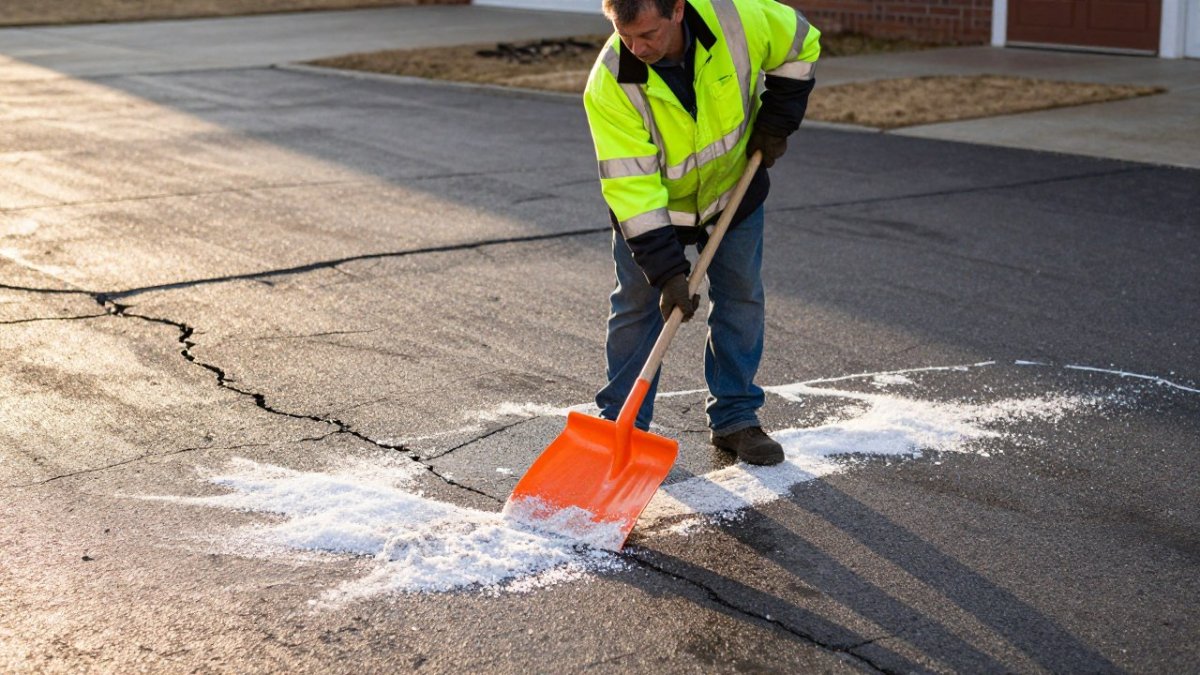
Using rock salt right at the seam. It breaks down the asphalt binder over time.
Planting deep-rooted shrubs within 2 feet of the edge. Roots travel under the pavement and lift it.
Skipping the fabric under gravel. Bare gravel fills with blown-in soil and becomes a seed bed.
Pouring boiling water or vinegar into cracks. Both damage the asphalt surface.
If you want the full picture on crack prevention, our article on how to prevent driveway cracks covers the seven steps that protect the whole slab, not just the edge.
When Edge Damage Needs a Paving Contractor
Some edge damage is a homeowner fix. Some needs a pro. Call a paving contractor when you see:
Cracks wider than a quarter inch
Crumbling or raveling along the edge
Sections that have sunk below the surrounding pavement
Water pooling against the driveway after rain
Weeds growing from under the asphalt, not just at the seam
That last one is the tell. Weeds pushing up through the pavement mean the base underneath has failed. No barrier or spray will fix that.
Our guide on signs your driveway needs repair walks through the warning signs in more detail.
Getting a Free Estimate for Edge Repairs
Before you call anyone, know what the job involves. Edge repair can mean crack filling, patching, edge milling, or a full rebuild of the failed section. The right fix depends on how deep the damage goes.
Our article on residential driveway repair costs explains what each type of repair involves so you can ask better questions. And when you're ready to compare contractors, read our guide on finding reliable asphalt paving contractors first. It covers licenses, insurance, references, and the red flags to walk away from.
Weeds at the edge are a symptom, not the disease. Loose soil, water, and a failing seam cause them, and a proper edge fix solves all three. Advanced Paving and Sealcoating, Inc. has handled edge repairs, patching, and sealcoating across Central Illinois for over 20 years as a family-owned company. We're available 24/7 for emergencies, and we back every job with an integrity-driven approach. Get started with Advanced Paving and Sealcoating, Inc. and stop pulling the same weeds every spring.
Frequently Asked Questions
How do you stop weeds from growing along driveway edges?
Start by pulling existing weeds with the root, then close the gap where soil meets asphalt. A weed barrier along driveway edges, covered with gravel or mulch, blocks light and slows regrowth. Keep the edge clean of blown-in dirt and seed, and refill any cracks at the seam with an asphalt-rated filler. A permanently weed-free edge is unlikely, as homeowners in online forums point out, but a maintained barrier and regular checks cut growth to a few minutes of pulling each month.
Does vinegar kill weeds growing beside a driveway?
Household vinegar can burn back small weeds on a sunny day, but it does not reliably kill deep roots, so many weeds return. It also washes into soil and can affect grass or plants you want to keep, and it does nothing for weeds rooted under asphalt at the edge. For driveway edges, hand-pulling plus a physical barrier is more dependable. If you use vinegar, spot-treat only and expect repeat applications rather than a one-time fix.
Will sealing a driveway stop weeds from growing along the edges?
Sealcoating protects the asphalt surface and slows water intrusion, which helps limit the cracks weeds exploit. It does not close the soil-to-asphalt seam where most edge weeds start, so pair sealing with edge cleanup and a barrier. Sealing also works best on sound pavement, so fix cracked or crumbled edges first. A contractor can tell you whether the edge needs patching before a sealcoat goes down.
How often should you clear weeds along a driveway?
Walk the edge every two to three weeks during the growing season and pull weeds while they are small. Spring and early summer need the most attention, since that is when seed germinates. After a barrier is in place, a monthly check plus a quick pass after storms that blow in dirt and seed usually keeps the edge tidy. Catching weeds early stops roots from widening cracks in the asphalt.
Comments