
Cold Weather and Your Asphalt: What Local Homeowners Should Know

If you've lived in Central Illinois for more than a winter or two, you know how brutal our cold seasons can be. Between the sub-zero temps, ice storms, and that lovely freeze-thaw cycle we get every February, it's no wonder our driveways take a beating. As someone who's been in the paving business for years, I can tell you that winter is when most of the damage to your asphalt actually happens – even if you don't notice it until spring.
The thing is, most homeowners don't realize how much cold weather affects their driveway until they're staring at a pothole that seemingly appeared overnight. But here's the truth: that damage has been building all winter long. Understanding what's happening to your asphalt during these cold months can save you thousands in repairs down the road.
Why Cold Weather is Your Asphalt's Worst Enemy
Think of asphalt like a chocolate bar. When it's warm, it's flexible and can bend without breaking. But when it gets really cold? It becomes brittle and cracks easily. That's essentially what happens to your driveway every winter.
When temperatures drop below freezing, asphalt contracts and loses its flexibility. This makes it vulnerable to cracking under even normal stress – like your car pulling into the driveway or kids riding bikes across it. The colder it gets, the more brittle your pavement becomes.
But temperature alone isn't the biggest problem. It's what happens when you combine cold with moisture that really does the damage.
The Freeze-Thaw Cycle: Your Driveway's Silent Killer
Here in Central Illinois, we're unfortunately experts at the freeze-thaw cycle. You know how it goes – it's 45 degrees and sunny one day, then 15 degrees the next. This constant back-and-forth is absolutely devastating to asphalt.
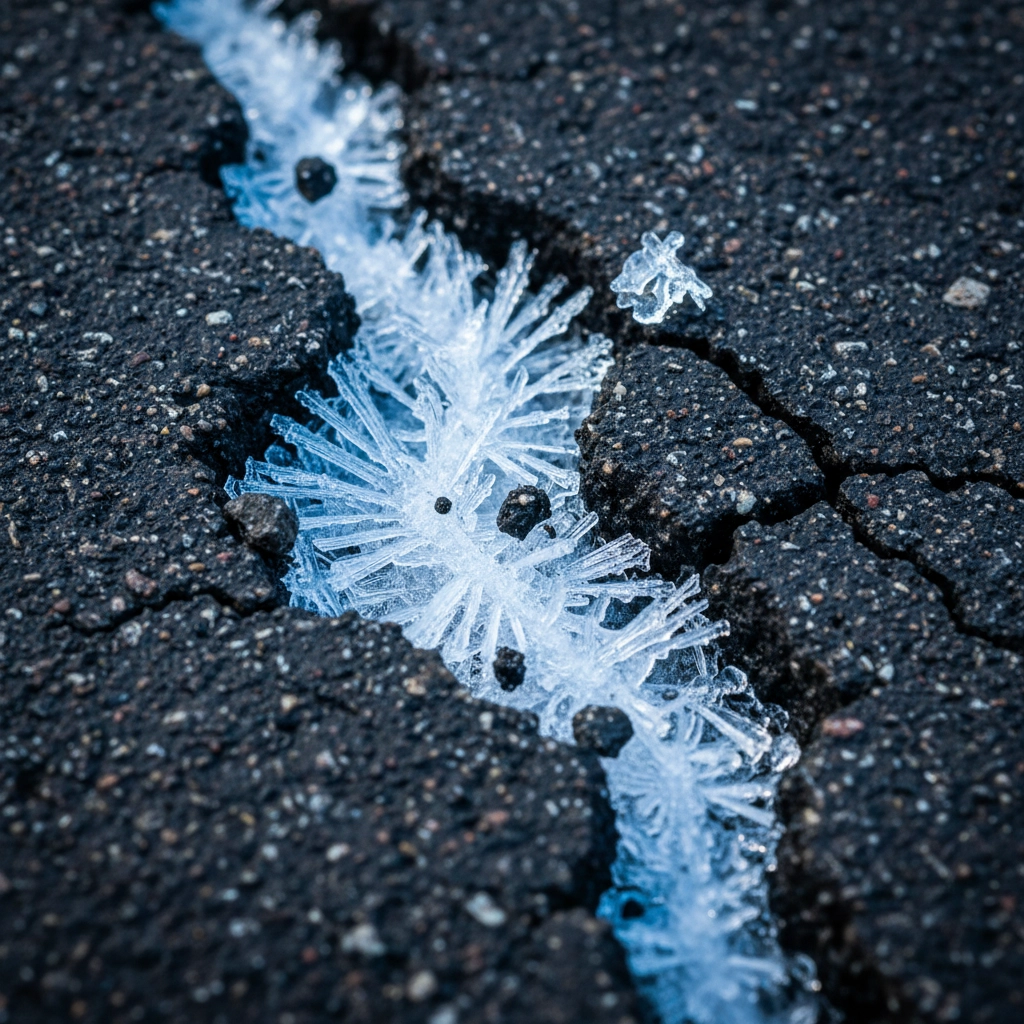
Here's what happens: When snow melts or rain falls during those warmer spells, water seeps into tiny cracks and pores in your asphalt. Then, when temperatures drop overnight, that water freezes. And when water freezes, it expands by about 10%.
Imagine trying to stuff a balloon into a straw, then inflating it. That's basically what's happening in those small cracks. The expanding ice creates enormous pressure, forcing the cracks to widen. Then when it thaws, more water gets in. Rinse and repeat all winter long, and those hairline cracks become significant damage.
The worst part? This process happens whether you can see it or not. Even microscopic cracks that aren't visible to the naked eye can allow water infiltration, starting this destructive cycle.
Common Winter Damage You'll See Come Spring
Every spring, we get calls from homeowners shocked by the condition of their driveways. "It was fine when the snow covered it!" they'll say. But winter damage has been accumulating all season. Here's what to watch for:
Alligator Cracking: This looks like a spider web of interconnected cracks and usually indicates that the base layer has been compromised by water infiltration.
Linear Cracks: These are straight-line cracks that often run parallel to the direction of traffic. They're usually caused by thermal contraction during extreme cold.
Potholes: These form when the subsurface can no longer support the pavement weight. They often start as small depressions but can grow rapidly, especially during spring thaw.
Edge Deterioration: The edges of your driveway are most vulnerable to water infiltration and freeze-thaw damage because they lack the support of surrounding pavement.
Protecting Your Investment Before Winter Hits
The best defense against winter damage is preparation. Think of it like winterizing your car – a little effort in the fall can prevent major problems later.
Get a Professional Assessment
Before cold weather arrives, have your driveway inspected for existing damage. Small cracks might not look like much, but they're entry points for water. Catching these early can prevent major repairs later.
Sealcoating is Your Best Friend
If your driveway hasn't been sealcoated in the last 2-3 years, fall is the perfect time. Sealcoating creates a waterproof barrier that prevents moisture infiltration – the root cause of most winter damage. It's like putting a protective coat on your pavement.
Clean and Clear
Keep your driveway free of debris, leaves, and standing water. Organic matter can retain moisture against the asphalt surface, increasing the risk of water infiltration. Plus, a clean driveway lets you spot potential problems before they become major issues.
Fix Small Problems Before They Become Big Ones
Those hairline cracks might seem insignificant, but they're tomorrow's potholes. Having them filled professionally before winter is much cheaper than replacing sections of damaged pavement in the spring.
Smart Winter Maintenance
Once winter arrives, there are still things you can do to minimize damage:
Snow Removal Strategy: Remove snow promptly, but be gentle. Avoid using sharp tools that might scrape the surface. A good snow blower or plastic shovel works great.
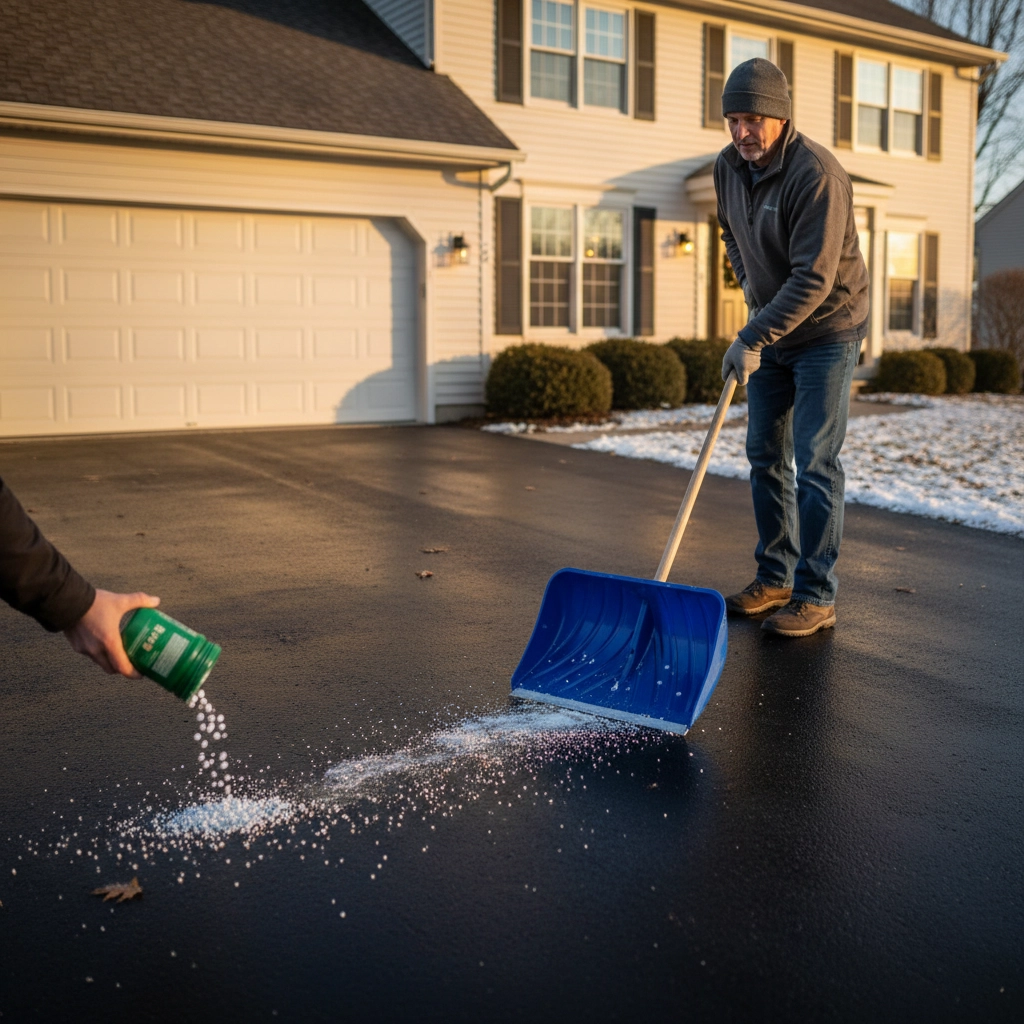
De-icing Wisely: Choose calcium chloride over rock salt when possible. Apply it sparingly – more isn't always better.
Watch for Drainage Issues: Make sure water from melting snow has somewhere to go. Standing water that repeatedly freezes and thaws will cause significant damage.
Traffic Patterns: If possible, vary where you drive and park. Repeatedly driving in the exact same path can stress already vulnerable areas.
When to Call the Professionals
Some winter damage requires immediate professional attention. If you notice:
Cracks wider than a quarter-inch
Any potholes, no matter how small
Areas where the pavement feels soft or spongy
Significant alligator cracking
Don't wait until spring. Emergency repairs might be possible even in winter, and at minimum, professionals can advise you on temporary measures to prevent further damage.
The Spring Recovery Plan
Come spring, schedule a thorough assessment of your driveway. Even if you don't see obvious damage, winter stress might have created issues that aren't immediately visible. Professional evaluation can identify problems while they're still manageable.
Spring is also the ideal time for maintenance like crack sealing, sealcoating, or addressing drainage issues that became apparent during winter.
Your Driveway's Long-Term Health
Remember, your driveway is a significant investment in your property. Proper winter care and maintenance can extend its life by years, maintaining both functionality and curb appeal. The relatively small cost of preventive maintenance is always less than the expense of major repairs or replacement.
Central Illinois winters are tough, but with the right knowledge and preparation, your asphalt can weather them successfully. The key is being proactive rather than reactive – taking care of small issues before they become big problems.
Stay ahead of winter damage, and your driveway will serve you well for years to come, no matter what our unpredictable Illinois weather throws at it.


header.all-comments