
Best Driveway Materials for Pothole Prevention: A Complete Guide
Last Updated: November 4, 2026
Quick Summary
The best driveway materials for pothole prevention are those that shed water, hold their shape under load, and tolerate seasonal movement, matched to your soil, drainage, and traffic load. Asphalt, concrete, gravel, and interlocking pavers can all resist potholes when installed over a properly compacted base with working drainage.
Asphalt driveways should be sealed every 2 to 3 years to prevent cracks and potholes.
Asphalt typically needs 2 to 3 inches of surface over 4 to 6 inches of base.
Concrete requires a 4-inch minimum thickness over a high-quality subbase.
Permeable grid systems move water at 30 to 50 inches per hour.
A pothole that keeps returning in the same spot is a base problem, not a surface flaw.
Table of Contents
Why Driveway Materials Decide Whether Potholes Form
A pothole is not a surface problem. It is a structural failure, and the material you choose determines how well the pavement resists it. According to Redfin's driveway material guidance, asphalt driveways should be sealed every 2 to 3 years to prevent cracks and potholes from taking hold.
Potholes generally start where water gets in and the base gives way, not where the surface looks worn.
Below, we break down how asphalt, concrete, gravel, and pavers actually perform, what the base layer has to do, and how drainage and maintenance keep a driveway intact.
Driveway Materials Compared: Asphalt, Concrete, Gravel and Pavers
The best driveway material for pothole resistance is the one matched to your soil, drainage, and traffic load. No single option wins everywhere. Here is how the four main choices stack up on the factors that actually determine whether a pothole forms.
Material | Pothole Resistance | Drainage | Repair Ease | Typical Installed Thickness | Best For |
Asphalt | High with a solid base | Moderate, needs slope | Easy patching | 2 to 3 inches over 4 to 6 inches of base | Cold climates, tight budgets |
Concrete | High, but cracks spread | Low, joints needed | Difficult | 4 inches minimum over a high-quality subbase | Heavy loads, low maintenance |
Gravel / permeable grid | Moderate, ruts common | Excellent | Easy regrading | 4 to 6 inches of angular stone | Wet sites, long runs |
Interlocking pavers | High, load-bearing | Good with open joints | Easy unit replacement | 1.5 to 2 inches of pavers over 6 to 8 inches of base | High-traffic, repairable surfaces |
Asphalt: Flexible Surface, Strong Base Required
Asphalt flexes under load and handles freeze-thaw movement better than rigid concrete. That flexibility is its pothole defense, but only when the aggregate base underneath is compacted and dry. A strong foundation is what keeps an asphalt driveway from failing. When the base is thin or was never compacted in lifts, the asphalt deflects under a tire, cracks, and lets water in.
Concrete: Durable but Crack-Prone in Freeze-Thaw
Concrete lasts decades when poured right, over a well-prepared subbase. The catch: concrete is rigid, so it cracks rather than flexes. Once water reaches the subbase through a crack, freeze-thaw cycles widen it into a pothole. Control joints are cut to force cracking into straight lines, but a joint that fills with water and freezes will spall the edges over time. Concrete resists rutting better than asphalt under heavy loads, which is why it suits truck traffic and equipment pads.
Gravel and Permeable Grids: Drainage First
Gravel drains better than any solid surface, and permeable plastic grid systems move water at 30 to 50 inches per hour (My Rain Plan's permeable driveway guide). That drainage is a real pothole advantage. The trade-off is maintenance: gravel needs frequent regrading, or ruts form and collect water (Eastern Oregon Inspections, 2024). Angular crushed stone locks together and resists displacement; rounded river rock shifts under tires and ruts almost immediately. A permeable grid confines the stone so it stays put, which cuts regrading frequency and keeps the surface draining.
Interlocking Pavers: Repairable and Load-Bearing
Pavers distribute weight across many small units and flex slightly with the ground. When one section settles, you lift and reset the units instead of patching a hole. The upfront cost runs higher, but repairability is strong. The base does the real work, and open joints let water pass through to that base. If the base is underbuilt, the pavers settle unevenly and the joints open wider, which is the same water-infiltration path that starts a pothole in asphalt.
Matching Material to Soil and Load
Soil composition drives the choice more than any surface preference. Clay holds water and expands when it freezes, so a driveway over clay needs a thicker, well-drained base and positive surface slope; sand drains quickly but shifts under load and needs confinement. A common pattern is that homeowners pick a surface first and discover the soil problem after the first failure. If you are weighing whether to resurface an existing driveway or rebuild it, the deciding question is whether the base is still sound.
Cost-Benefit Over the Long Run
Upfront material cost is the least useful number for pothole prevention. What matters is total cost of ownership across a decade or more: how often the surface needs patching, regrading, or resurfacing, and how soon the base has to be rebuilt. Asphalt has the lowest upfront cost but needs periodic surface maintenance. Concrete costs more to place and more to repair when a section fails, but it holds up under heavy loads. Gravel is cheapest to install and cheapest to touch up, but demands the most frequent labor.
The Base Layer Does the Heavy Lifting
A driveway is only as good as what sits under it. Crushed stone is the recommended aggregate base because it compacts tightly and drains well (Hello Gravel's aggregate base guide). Skip that step, and the surface fails no matter how good the asphalt or concrete is.
Soil Composition Is the Variable Most Guides Ignore
The subgrade, the native soil under the base, is where pothole prevention actually starts. Clay holds water, expands when it freezes, and shrinks when it dries, so a base built directly on clay pumps and settles with every season. Sand drains fast but has little load-bearing strength on its own and shifts under tires. Silt behaves like a middle case that is stable when dry and weak when wet.
Lift Thickness and Compaction
Compaction density is the detail most homeowners never see. A base that is not compacted in lifts traps air and moisture, and that moisture migrates upward through freeze-thaw cycles until the surface cracks. Stone is generally best placed in thin lifts and compacted between each one, rather than dumped in one thick layer and rolled once. A single deep lift leaves loose stone at the bottom that never locks together, and that loose zone is where the surface deflects and cracks. Moisture content matters too: stone that is too dry will not compact, and stone that is saturated will not either.
Aggregate Gradation
Not all crushed stone is equal. A well-graded base mix blends coarse and fine particles so the fines fill the voids between the larger stones, producing a dense, interlocking layer that resists water movement. Open-graded stone drains faster but has more void space and less load transfer. The right choice depends on whether the site needs drainage or strength, and many driveways use a drainage layer under a denser base. For a deeper look at what causes foundation failure, see our guide on common causes of asphalt base failure.
Diagnosing a Base Failure vs. a Surface Flaw
A pothole that keeps returning in the same spot is a base problem, not a surface problem. Surface flaws are shallow, spread slowly, and respond to patching. Base failures show up as depressions that refill with water, cracks that radiate from a low point, and pavement that sounds hollow or moves underfoot.

The man is American.
Driveway Drainage Solutions That Stop Potholes Early
Water is the enemy. Every drainage fix you make is a pothole you prevent. Moisture infiltration softens the base, and softened base is where potholes begin.
Practical drainage moves:
Grade the surface so water runs off, not toward the garage
Add a swale or channel drain at the low point
Line the base with geotextile fabric to stop fines from migrating
Keep gutters and downspouts discharging away from the pavement edge
For a full step-by-step approach, our guide on preventing parking lot potholes walks through the same drainage logic that applies to residential driveways.
Gravel Driveway Repair: Fixing Ruts Before They Become Potholes
Rutting is the warning sign. A rut holds water, and a rut that holds water becomes a pothole. Fix it before the base is compromised.
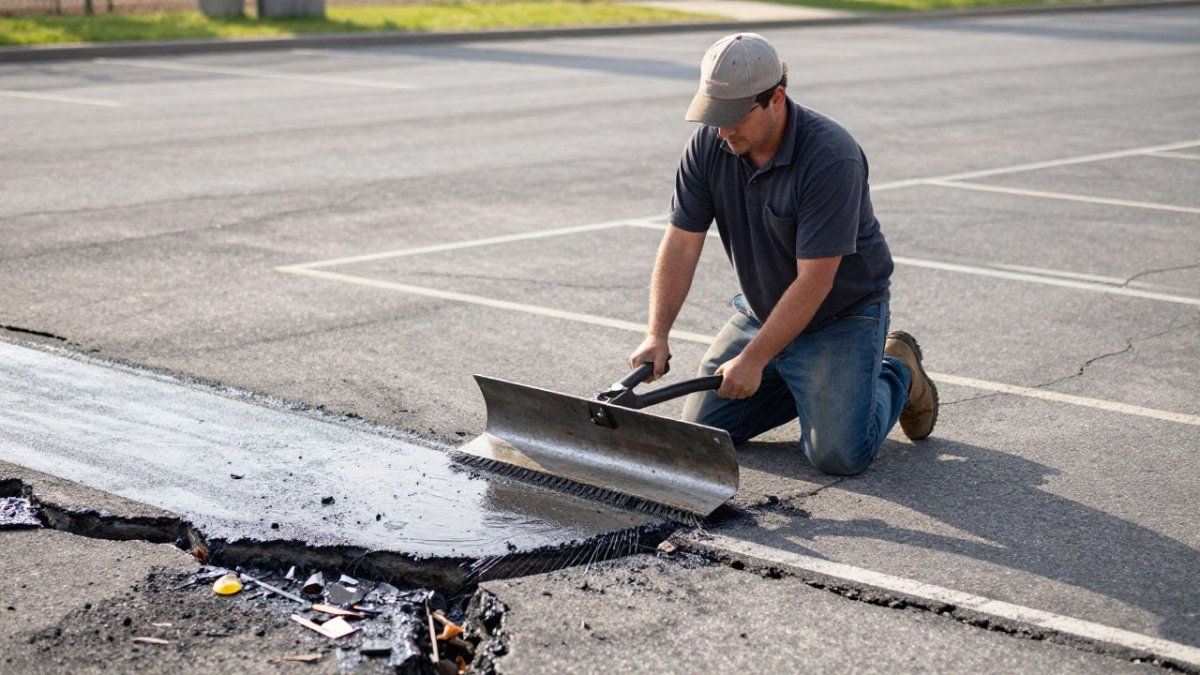
The fix is straightforward: rake or grade the loose aggregate back into the low spots, then recompact. Add fresh crushed stone with angular edges, since rounded stone shifts instead of locking together. If ruts keep returning in the same place, the base is failing and surface grading will not solve it. Our breakdown of the best asphalt repair methods covers when patching is enough and when the section needs rebuilding.
Driveway Maintenance Tips That Extend Surface Life
Consistent maintenance beats any single material choice. These driveway maintenance tips keep water out and small flaws from growing:
Seal asphalt every 2 to 3 years
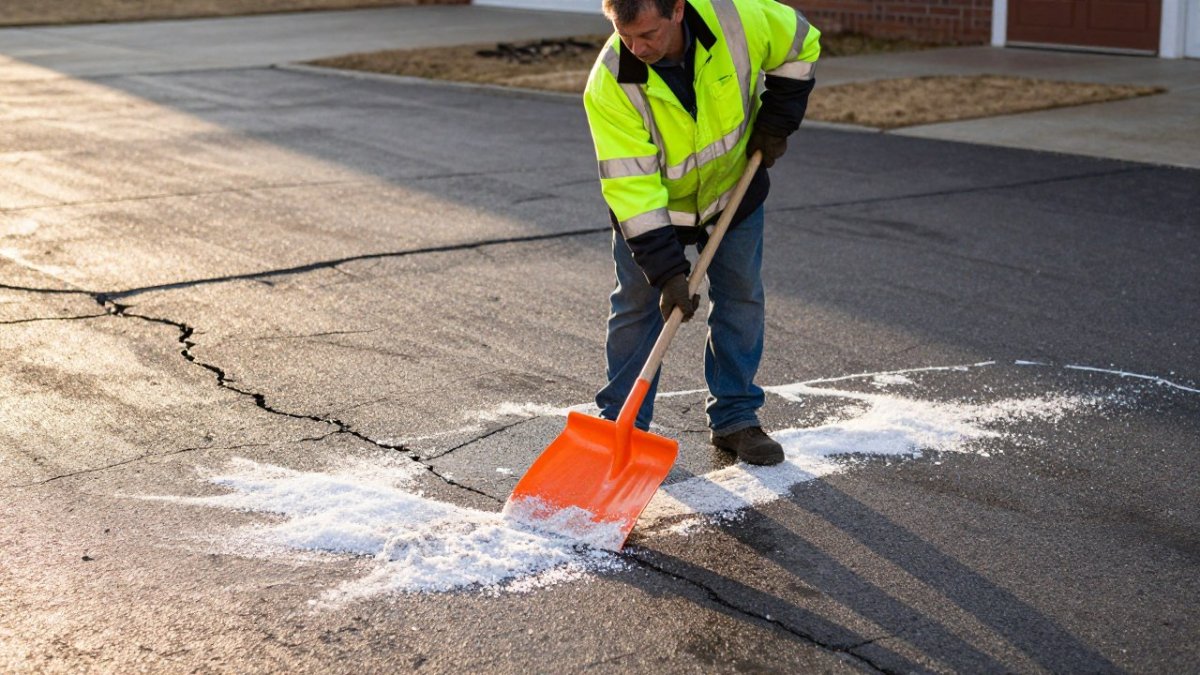
Fill cracks before winter, not after
Clear snow and ice without metal blades that gouge the surface
Keep heavy loads off the edges, where pavement is thinnest
Inspect after every freeze-thaw stretch
Asphalt Paving Sealcoating: When It Helps and When It Doesn't
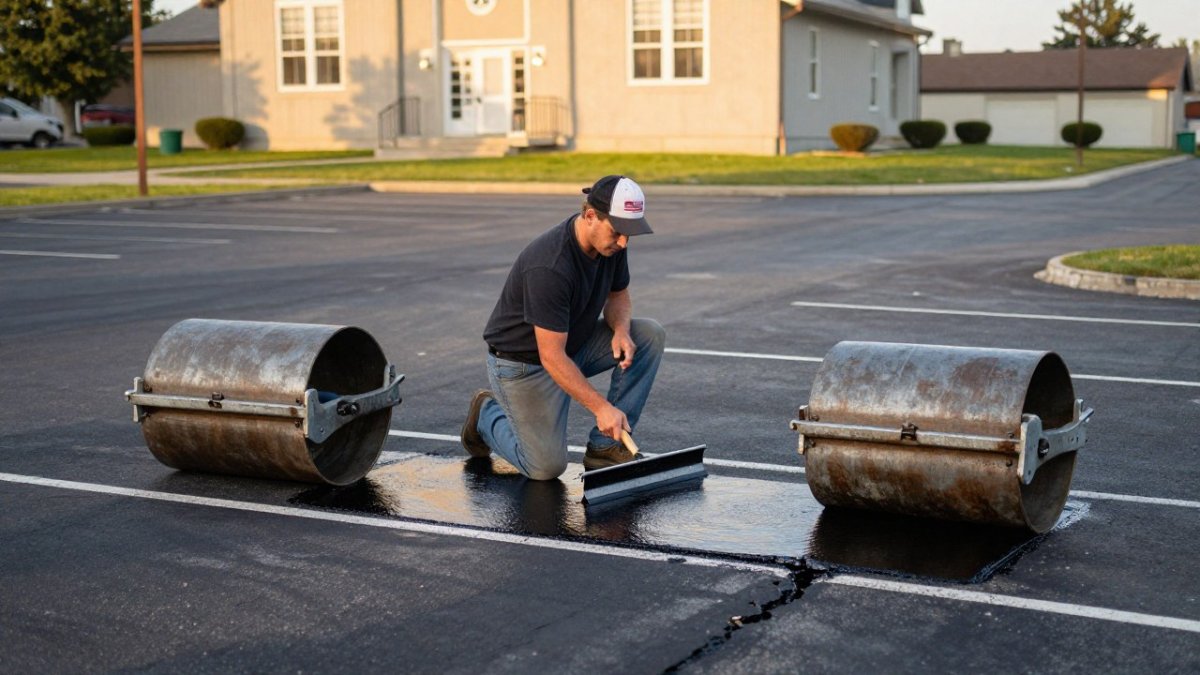
Asphalt paving sealcoating protects the surface from water, sun, and chemical spills, and it slows the oxidation that makes asphalt brittle. On a sound driveway, it is the cheapest pothole insurance you can buy.
It is not a fix for structural damage. Sealcoating over a failing base traps moisture and hides the problem until it gets worse. Seal the surface, but repair the base first. Our complete sealcoating guide explains the timing and prep work that make it last.
Get a Free Estimate Before Pothole Season Starts
The best driveway materials for pothole prevention only perform when they are installed over a properly compacted base with drainage that works. That is the part most homeowners cannot see and most crews rush.
Advanced Paving and Sealcoating, Inc. is a family-owned contractor serving Central Illinois. We handle asphalt paving, sealcoating, patching, and excavation for driveways, parking lots, and private roads.
Get started with Advanced Paving and Sealcoating, Inc. and protect your pavement before the next freeze. Request your free estimate today.
Frequently Asked Questions
What is the lowest maintenance driveway material?
Concrete and interlocking pavers generally need the least routine upkeep, but neither is maintenance-free. Concrete driveways need a well-prepared subbase for durability, and joints still need sealing. Asphalt generally benefits from periodic sealcoating to help prevent cracks and potholes. Gravel is the cheapest to install but demands frequent regrading to stop ruts from turning into potholes.
Why does my gravel driveway keep getting potholes?
Gravel potholes usually trace back to two failures: poor drainage and missing angular aggregate. Water pools in low spots, softens the base, and tires push the saturated stone aside. Crushed stone with angular edges locks together under compaction far better than rounded river rock. Add a geotextile fabric between the soil and the gravel, crown the surface so water runs off, and regrade before ruts deepen. Skipping any of those steps is why the same holes return every spring.
How does proper drainage prevent driveway potholes?
Water is the root cause of most pothole damage. It seeps into the base layer, weakens the sub-base, and expands during freeze-thaw cycles, which pushes the surface up and then collapses it under vehicle weight. Driveway drainage solutions like a crowned surface, side swales, French drains, or permeable grid systems move water away before it infiltrates. Permeable grid systems can drain water well, helping keep the base dry and stable.
Is asphalt or concrete better for preventing surface damage?
Asphalt flexes with ground movement and handles freeze-thaw cycles better in cold climates, while concrete resists rutting but cracks more readily when the subbase shifts. Both depend on a compacted aggregate base. Asphalt requires sealcoating every 2 to 3 years; concrete needs joint maintenance and crack sealing. In Central Illinois, where winter freeze-thaw is aggressive, the deciding factor is usually base preparation and drainage, not the surface material itself.
Comments